|
|
|
|
BY JUSTIN RAY Follow the undocking and landing of the Expedition 14 space station crew aboard a Russian Soyuz spacecraft. Reload this page for updates.
2040 GMT (4:40 p.m. EDT) "It is impossible to describe what I feel," Michael Lopez-Alegria said. "There are a lot of special things that we each feel about our experience in space." The landing day activities will conclude with the crew's arrival back at the Gagarin Cosmonaut Training Center in Star City, Russia. That is where the three men will be reunited with family and friends. And check out some photos of the crewmates just after their exit from the Soyuz capsule here.
1325 GMT (9:25 a.m. EDT) The crew has been moved to the medical tent. They will be flown from the landing site in a little while, headed for a welcoming in the city of Karaganda, Kazakhstan. They'll then fly back to the cosmonaut training complex in Star City later today.
1306 GMT (9:06 a.m. EDT)
1258 GMT (8:58 a.m. EDT) The three crew members are seated in special reclining chairs near the craft for initial medical tests and to provide an opportunity to begin readapting to Earth's gravity. A medical tent will be set up nearby the capsule in which the crew can change out of the launch and entry suits and prepare for the chopper flight away from the landing zone.
1254 GMT (8:54 a.m. EDT)
1249 GMT (8:49 a.m. EDT)
1246 GMT (8:46 a.m. EDT)
1243 GMT (8:43 a.m. EDT)
1239 GMT (8:39 a.m. EDT) "It's hard to believe we were just having tea with them a couple of hours ago," Suni Williams remarked after seeing footage of the Soyuz on the ground.
1236 GMT (8:36 a.m. EDT)
1231 GMT (8:31 a.m. EDT)
1230 GMT (8:30 a.m. EDT)
1229 GMT (8:29 a.m. EDT)
1225 GMT (8:25 a.m. EDT)
1223 GMT (8:23 a.m. EDT) With the jettisoning of the capsule's heat shield, the Soyuz altimeter is exposed to the surface of the Earth. Using a reflector system, signals are bounced to the ground from the Soyuz and reflected back, providing the capsule's computers updated information on altitude and rate of descent.
1220 GMT (8:20 a.m. EDT) Once the drogue chute is jettisoned, the main parachute is deployed. It is connected to the Descent Module by two harnesses, covers an area of about 1,000 square meters and slows descent to 7.2 meters/second. Initially, the Descent Module will hang underneath the main parachute at a 30-degree angle with respect to the horizon for aerodynamic stability, but the bottommost harness will be severed a few minutes before landing, allowing the Descent Module to hang vertically through touchdown.
1217 GMT (8:17 a.m. EDT) The parachute deployment creates a gentle spin for the Soyuz as it dangles underneath the drogue chute, assisting in the capsule's stability in the final minutes before touchdown.
1214 GMT (8:14 a.m. EDT)
1210 GMT (8:10 a.m. EDT)
1209 GMT (8:09 a.m. EDT) The entry guidance by the spacecraft's onboard software package is scheduled to start in a couple of minutes.
1206 GMT (8:06 a.m. EDT)
1200 GMT (8:00 a.m. EDT) Just above the first traces of the Earth's atmosphere, computers will command the separation of the three modules of the Soyuz vehicle. With the crew strapped in to the Descent Module, the forward Orbital Module containing the docking mechanism and rendezvous antennas and the rear Instrumentation/Propulsion Module, which houses the engines and avionics, will pyrotechnically separate and burn up in the atmosphere. The Descent Module's computers will orient the capsule with its ablative heat shield pointing forward to repel the buildup of heat as it plunges into the atmosphere. Entry interface at the upper fringes of the atmosphere, when the capsule is about 400,000 feet above the Earth, happens about three minutes after module separation.
1150 GMT (7:50 a.m. EDT)
1146 GMT (7:46 a.m. EDT)
1144 GMT (7:44 a.m. EDT)
1142 GMT (7:42 a.m. EDT) The craft is flying backward over the southern Atlantic Ocean on a northeasterly trajectory bound for Africa and eventually Central Asia where landing is expected at 8:30 a.m. EDT in central Kazakhstan.
1119 GMT (7:19 a.m. EDT)
0915 GMT (5:15 a.m. EDT)
0911 GMT (5:11 a.m. EDT)
0909 GMT (5:09 a.m. EDT)
0605 GMT (2:05 a.m. EDT) After exchanging final hugs with the station's new residents, the three men floated into the Soyuz from the Zvezda living quarters module. Expedition 15 commander Fyodor Yurchikhin closed the hatchway at about 2:04 a.m. EDT. "Thank you very much for the hospitality. I enjoyed working here and working with the excellent crews and commanders," Simonyi said in the farewell ceremony with Russian controllers earlier this morning. "I'm looking forward to the return flight. It is a bittersweet moment for all of us. We are very sad leaving the station but at the same time looking forward to continuing our work on Earth." Undocking is scheduled for 5:11 a.m., with landing anticipated at 8:30 a.m. EDT.
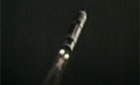
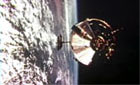
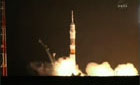
FRIDAY, APRIL 20, 2007 Landing morning begins with Expedition 14 commander Michael Lopez-Alegria and flight engineer Mikhail Tyurin, along with visiting tourist Charles Simonyi, saying their goodbyes to the station's new crew -- Expedition 15 commander Fyodor Yurchikhin and flight engineers Oleg Kotov and Suni Williams -- and then floating into the Soyuz TMA-9 craft currently docked to the station's Zvezda service module aft port. The seven-month Expedition 14 mission is concluding with Lopez-Alegria now holding the record for the longest U.S. spaceflight. He also moved atop the American spacewalker stats for the most EVAs - 10 - performed by one astronaut. "We have very mixed emotions about leaving, but it doesn't matter what we think - it is time," Lopez-Alegria told mission control CAPCOM astronaut Shannon Lucid this morning. "I just want to pass on for the whole crew that we've had a blast. It's been a short seven months in a way, but it's time to come home and hand over the torch to the next crew, whom I'm sure will be up for the challenge and continue the development and construction of the space station and all of the good things that are going on up here. It's been our pleasure." "Speaking for everyone down here, it has been a double pleasure for us to work with (the) Expedition 14 crew and you," Lucid replied. The hatchway between the station and Soyuz is expected to be closed around 2 a.m. EDT (0600 GMT). The homeward-bound crew will work together for a next couple of hours to power up the Soyuz, active the craft's systems, remove docking clamps, depressurize the vestibule between the capsule and station and perform other work to ready for undocking. Yurchikhin, Kotov and Simonyi launched to the station two weeks ago Saturday aboard Soyuz TMA-10. After the brief stay, Simonyi is going home while Expedition 15 is left behind for a half-year tour-of-duty on the outpost. The command to begin opening hooks and latches firmly holding Soyuz to its docking port will be sent at 5:08:30 a.m. EDT (0908:30 GMT). Physical separation between the two craft occurs three minutes later. After moving a short distance from the station, the Soyuz engines will fire for 15 seconds to execute the so-called separation burn to propel the craft out of the orbiting lab's vicinity. About two-and-a-half hours later, the capsule's engines will ignite for the deorbit burn to brake from space. The onboard computers will initiate an engine firing at 7:42:30 a.m. EDT (1142:30 GMT) that slows the ship just enough to slip out of orbit for the return to Earth. The burn will last four minutes and 18 seconds. Shortly before reaching the top of the atmosphere, the Soyuz's three distinct modules will separate at 8:05:37 a.m. EDT (1205:37 GMT) under computer command. The crew will be located in the Descent Module, which is sandwiched between the forward Orbital Module containing the docking mechanism and the rear Instrumentation and Propulsion Module housing the engines and avionics. The Descent Module orients itself to point the ablative heat shield in the direction of travel to protect the craft and crew from the intense plunge back to Earth. At 8:08:29 a.m. EDT (1208:29 GMT), the moment of Entry Interface occurs as the capsule hits the upper fringes of the atmosphere for the fiery re-entry. During the fall to Earth, the Orbital Module and Instrumentation and Propulsion Module will burn up in the atmosphere. Six minutes after Entry Interface, the crew will experience the period of maximum G-loads during entry as they feel the tug of Earth's gravity for the first time since launch. At 8:16:33 a.m. EDT (1216:33 GMT), the onboard computers will start a commanded sequence for deployment of the capsule's parachutes at an altitude of about 10 kilometers. Two "pilot" parachutes are unfurled first, extracting a 24-square-meter drogue parachute. Within 16 seconds, the craft's fall will slow from 230 meters per second to about 80 m/s. The parachute deployment creates a gentle spin for the Soyuz as it dangles underneath the drogue chute, assisting in the capsule's stability in the final minutes before touchdown. The drogue chute will be jettisoned, allowing the main parachute to be deployed. It is connected to the Descent Module by two harnesses, covers an area of about 1,000 square meters and slows descent to 7.2 meters/second. Initially, the Descent Module will hang underneath the main parachute at a 30-degree angle with respect to the horizon for aerodynamic stability, but the bottommost harness will be severed a few minutes before landing, allowing the Descent Module to hang vertically through touchdown. At an altitude of just over 5 kilometers, the heat shield will be cast free. That is followed by dumping of any residual propellant from the Soyuz. Once the heat shield is gone, the Soyuz altimeter is exposed to the surface of the Earth. Using a reflector system, signals are bounced to the ground from the Soyuz and reflected back, providing the capsule's computers updated information on altitude and rate of descent. At an altitude of about 12 meters, cockpit displays will tell the crew to prepare for the soft landing engine firing. Just one meter above the surface, and just seconds before touchdown, the six solid propellant engines are fired in a final braking maneuver, enabling the Soyuz to land to complete its mission, settling down at a velocity of about 1.5 meters per second. Touchdown is expected at 8:30:34 a.m. EDT (1230:34 GMT) on the steppes of central Kazakhstan, about two hours before sunset at the landing site. Expedition 14 concludes with a duration of 215 days, 8 hours, 21 minutes and 54 seconds. The crew received a bonus day in space following the decision earlier this week to delay the landing from Friday to Saturday. The change in plans was necessary to retarget the touchdown to the Soyuz's southern landing zone, which wasn't accessible on Friday. "The decision to move the landing to Saturday and further to the south came after a helicopter surveillance of Central Kazakhstan last weekend by the Russian search and recovery forces, which revealed standing snow and flooding in the regular landing region near Arkalyk," NASA spokesman Rob Navias explained. "The (new) landing site to the southwest of the large industrial city of Karaganda and to the northeast of the remote town of Dzhezkazgan is dry." A group of Russian military helicopters carrying the recovery forces, including a U.S. flight surgeon and astronaut support personnel, should arrive soon after landing to help the crew exit the capsule. Each crew member will be placed in special reclining chairs near the capsule for initial medical tests and begin readapting to Earth's gravity. They will be transferred into a portable medical tent erected near the touchdown point where the three crew members can remove their spacesuits. Post-landing plans call for the crew to be flown from the site in helicopters. |
|
|
|
Final Shuttle Mission Patch Free shipping to U.S. addresses! The crew emblem for the final space shuttle mission is now available in our store. Get this piece of history!STS-134 Patch Free shipping to U.S. addresses! The final planned flight of space shuttle Endeavour is symbolized in the official embroidered crew patch for STS-134. Available in our store!Ares 1-X Patch The official embroidered patch for the Ares 1-X rocket test flight, is available for purchase.Apollo Collage This beautiful one piece set features the Apollo program emblem surrounded by the individual mission logos.Project Orion The Orion crew exploration vehicle is NASA's first new human spacecraft developed since the space shuttle a quarter-century earlier. The capsule is one of the key elements of returning astronauts to the Moon.Fallen Heroes Patch Collection The official patches from Apollo 1, the shuttle Challenger and Columbia crews are available in the store. |
||||||||||||||||||||||||||||||||||||||||
|
INDEX | PLUS | NEWS ARCHIVE | LAUNCH SCHEDULE ASTRONOMY NOW | STORE ADVERTISE © 2012 Spaceflight Now Inc. |
||||||||||||||||||||||||||||||||||||||||||||||