Station's carbon dioxide scrubber back on line
BY WILLIAM HARWOOD
STORY WRITTEN FOR CBS NEWS "SPACE PLACE" & USED WITH PERMISSION
Posted: July 26, 2009

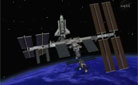
Worried the shuttle Endeavour might have to undock early because of a carbon dioxide removal problem aboard the International Space Station, engineers at the Johnson Space Center in Houston came up with a manual control work-around that successfully restored the CO2 removal system to near-normal operation.
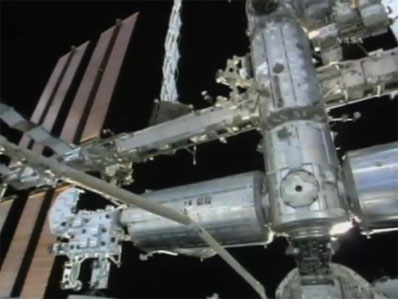
Credit: NASA TV
|
The solution requires flight controllers to uplink complex command sequences to control the carbon dioxide removal assembly, or CDRA, work normally carried out by on-board software, because of a heater control problem that cropped up Saturday and resulted in a blown circuit breaker.
With six full-time station astronauts and seven shuttle crew members on board the shuttle-station complex, carbon dioxide removal is a critical requirement. Without the CDRA, the Russian Vozdukh CO2 removal system and the CO2-scrubbing lithium hydroxide canisters aboard Endeavour would be over-taxed.
But engineers in Houston, led by environmental control and life support systems officer John Garr, came up with a work-around that allowed flight controllers to restart the CDRA Saturday evening.
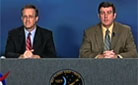
"We saw higher temperatures than we typically see on the carbon dioxide removal assembly, which is located in the International Space Station laboratory module," space station Flight Director Derek Hassmann said early Sunday.
"We reacted to that by turning off heaters in that system. We didn't see the temperature decrease that we expected, so initially we thought that the heater was failed on, or stuck on, for some reason. As we were looking at that, we had one of the circuit breakers in the power system trip, which removed power from the system.
"So we went back and looked at the data and we think the problem lies somewhere in the heater controller assembly that actually tells the heater when to cycle on and off based on temperature data from the carbon dioxide removal assembly," he said. "And based on that assessment, we put together a procedure that basically allowed the ground to control the system in the way the software normally does."
"Normally, the carbon dioxide removal system operates completely on its own, scrubbing carbon dioxide from the air and then dumping that carbon dioxide overboard, and it's run by the software in the space station computers. But without that heater controller, and with that circuit breaker failed open, the system will no longer operate in that autonomous, or stand-alone, mode.
"So what we've done is, we built a set of commands and we put together a procedure that allows the folks on the ground in the control center to move the valves and command the system in the way the software normally does. It's not something that we want to do long term, for weeks for example, because (of) the number of commands we have to send from the ground. But in the short term, we've got the carbon dioxide removal system back up and running and operating at close to its normal capacity."
After Endeavour undocks Tuesday, the space station crew plans to replace the presumably faulty controller to restore CDRA to normal operation. A new carbon dioxide removal assembly is being launched on the next shuttle mission in late August.
"Bottom line, we're operating it manually with commands from the ground and we're scrubbing CO2 at a level we're happy with," Hassmann said. "After the shuttle leaves, we're going to talk about actually removing and replacing that heater controller."
At the Kennedy Space Center, meanwhile, the shuttle Discovery was hauled from its processing hangar at 7:22 a.m. EDT Sunday for the short trip to the Vehicle Assembly Building where it will be attached to an external tank and a set of solid-fuel rocket boosters. Rollout to launch pad 39A is targeted for Aug. 5, setting the stage for launch August 25 around 1:35 a.m.
NASA originally planned to to launch Discovery around Aug. 18, but conflict with a Delta rocket launch pushed the shuttle flight to Aug. 21 and then work to test the orbiter's external tank foam insulation triggered an additional delay.
During Endeavour's launch, an unusual amount of foam insulation fell away from external tank No. 131's central intertank section. To assess the condition of ET-132, the tank reserved for Discovery, engineers carried out two rounds of so-called plug-pull tests, drilling small cores in the intertank foam and then pulling on the insulation to make sure it was firmly bonded to the underlying structure.
Some 150 plug-pull tests were carried out and the foam behaved as expected. Analysis and repair of the foam cores is ongoing, but NASA managers felt confident enough about the health of the insulation to proceed with Discovery's roll over to the VAB.
Shuttle program managers plan to review Discovery's flight readiness Aug. 11 and 12, followed by an executive-level flight readiness review Aug. 18.
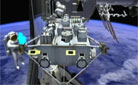
Aboard the space station Sunday, the astronauts planned to use the station and shuttle robot arms to remove a Japanese payload carrier pallet from the Kibo module's new external experiment platform and stow it back in Endeavour's cargo bay for return to Earth.
The combined 13-member crew will hold a traditional joint crew news conference at 2:28 p.m. to discuss the progress of the mission before reviewing the timeline and procedures for a fifth and final spacewalk Monday.
Astronauts Christopher Cassidy and Thomas Marshburn face a full plate for their final excursion. repairing insulation on the Canadian DEXTRE construction robot, rewiring a gyroscope control circuit, installing two television cameras on the Japanese experiment platform and deploying a spare parts attachment mechanism on the station's main power truss.
Cassidy and Marshburn plan to spend the night in the Quest airlock at a reduced pressure of 10.2 pounds per square inch to help purge nitrogen from their bloodstreams in preparation for working in NASA's 5-psi spacesuits.
Here is an updated timeline of today's activity (in EDT and mission elapsed time; includes revision M of the NASA television schedule; SRMS: shuttle robot arm; SSRMS: station robot arm; JLE: Japanese experiment pallet):
EDT........DD...HH...MM...EVENT

07/26
04:03 AM...10...10...00...STS/ISS crew wakeup
05:13 AM...10...11...10...ISS PAO event
06:03 AM...10...12...00...ISS daily planning conference
07:08 AM...10...13...05...SSRMS JLE grapple
07:08 AM...10...13...05...EVA-5: Tools configured
07:48 AM...10...13...45...JLE uninstall
08:18 AM...10...14...15...SRMS grapples JLE
08:38 AM...10...14...35...SSRMS releases JLE
08:38 AM...10...14...35...EVA-5: Spacesuit swap
08:58 AM...10...14...55...SRMS berths JLE
09:28 AM...10...15...25...EVA-5: Equipment lock preps
10:38 AM...10...16...35...Crew meals begin
11:00 AM...10...16...57...Mission status briefing
12:38 PM...10...18...35...EVA-5: Conference
02:28 PM...10...20...25...Joint crew news conference
03:08 PM...10...21...05...Crew photo
03:28 PM...10...21...25...EVA-5: Procedures review

Additional coverage for subscribers:
 VIDEO:
OVERVIEW OF FLIGHT DAY 12 ACTIVITIES PLAY VIDEO:
OVERVIEW OF FLIGHT DAY 12 ACTIVITIES PLAY

VIDEO:
FLIGHT DAY 11 HIGHLIGHTS MOVIE PLAY
VIDEO:
INTERNATIONAL MESSAGE FROM SHUTTLE AND ISS CREWS PLAY
VIDEO:
INDY, CBS NEWS AND MEMPHIS MEDIA INTERVIEWS PLAY
VIDEO:
SATURDAY MORNING FLIGHT DIRECTOR INTERVIEW PLAY
VIDEO:
FLIGHT DAY 10 HIGHLIGHTS MOVIE PLAY
VIDEO:
FRIDAY'S MISSION STATUS BRIEFING PLAY
VIDEO:
DELIVERY PALLET RETURNS TO SHUTTLE PLAY
VIDEO:
LAST OF THE OLD BATTERIES STOWED AWAY PLAY
VIDEO:
SIXTH AND FINAL NEW BATTERY IS PLUGGED IN PLAY
VIDEO:
SPACEWALKERS RESUME WORK WITH BATTERY CHARLIE PLAY
VIDEO:
FRIDAY MORNING FLIGHT DIRECTOR INTERVIEW PLAY
VIDEO:
FLIGHT DAY 9 HIGHLIGHTS MOVIE PLAY
VIDEO:
THURSDAY'S MISSION STATUS BRIEFING PLAY
VIDEO:
MORE INTERVIEWS WITH LAS VEGAS, HOUSTON AND FOX PLAY
VIDEO:
NORTH CAROLINA, MAINE AND ORLANDO TV INTERVIEWS PLAY
VIDEO:
COMMUNICATIONS PACKAGE PUT ON SCIENCE DECK PLAY
VIDEO:
X-RAY ASTRONOMY PAYLOAD INSTALLED ON STATION PLAY
VIDEO:
THURSDAY MORNING FLIGHT DIRECTOR INTERVIEW PLAY
VIDEO:
OVERVIEW OF FLIGHT DAY 9 ACTIVITIES PLAY
VIDEO:
FLIGHT DAY 8 HIGHLIGHTS MOVIE PLAY
VIDEO:
WEDNESDAY'S MISSION STATUS BRIEFING PLAY
VIDEO:
EARLY END TO SPACEWALK NO. 3 DECLARED PLAY
VIDEO:
SECOND FRESH BATTERY PUT INTO STATION TRUSS PLAY
VIDEO:
FIRST OF THE NEW BATTERIES INSTALLED PLAY
VIDEO:
SPACEWALKERS REMOVE FIRST OLD BATTERY PLAY
VIDEO:
CHRIS CASSIDY PREPS JAPANESE EXPERIMENTS PLAY
VIDEO:
WEDNESDAY MORNING FLIGHT DIRECTOR INTERVIEW PLAY
VIDEO:
STEP-BY-STEP SUMMARY OF SPACEWALK NO. 3 PLAY
VIDEO:
LEFT-HAND BOOSTER CAMERA LOOKING UPWARD PLAY
VIDEO:
LEFT-HAND BOOSTER CAMERA LOOKING INBOARD PLAY
VIDEO:
LEFT-HAND BOOSTER CAMERA LOOKING DOWNWARD PLAY
VIDEO:
RIGHT-HAND BOOSTER CAMERA LOOKING UPWARD PLAY
VIDEO:
RIGHT-HAND BOOSTER CAMERA LOOKING INBOARD PLAY
VIDEO:
RIGHT-HAND BOOSTER CAMERA LOOKING DOWNWARD PLAY
VIDEO:
FLIGHT DAY 7 HIGHLIGHTS MOVIE PLAY
VIDEO:
TUESDAY'S MISSION STATUS BRIEFING PLAY
VIDEO:
CREW ANSWERS PUBLIC'S QUESTIONS FROM SPACE PLAY
VIDEO:
EXPOSED FACILITY RECEIVES EXPERIMENT CARRIER PLAY
VIDEO:
JAPANESE EXPERIMENTS UNBERTHED FROM SHUTTLE PLAY
VIDEO:
OVERVIEW OF FLIGHT DAY 7 ACTIVITIES PLAY
VIDEO:
TUESDAY MORNING FLIGHT DIRECTOR INTERVIEW PLAY
VIDEO:
FLIGHT DAY 6 HIGHLIGHTS MOVIE PLAY
VIDEO:
MONDAY'S MISSION STATUS BRIEFING PLAY
VIDEO:
REPLACEMENT COOLING PUMP PUT ON STATION PLAY
VIDEO:
SPARE COMMUNICATIONS ANTENNA TRANSFERRED PLAY
VIDEO:
SPACEWALKER HOPS ABOARD STATION ARM PLAY
VIDEO:
WOLF AND MARSHBURN BEGIN EVA NO. 2 PLAY
VIDEO:
OVERVIEW OF FLIGHT DAY 6 ACTIVITIES PLAY
VIDEO:
STEP-BY-STEP SUMMARY OF SPACEWALK NO. 2 PLAY
VIDEO:
MONDAY MORNING FLIGHT DIRECTOR INTERVIEW PLAY
VIDEO:
OVERVIEW OF FLIGHT DAY 6 ACTIVITIES PLAY
VIDEO:
STEP-BY-STEP SUMMARY OF SPACEWALK NO. 2 PLAY
VIDEO:
FLIGHT DAY 5 HIGHLIGHTS MOVIE PLAY
VIDEO:
CANADIANS IN SPACE PLAY
VIDEO:
SUNDAY'S MISSION STATUS BRIEFING PLAY
VIDEO:
PALLET HANDED OFF TO SPACE STATION PLAY
VIDEO:
CARGO CARRIER UNBERTHED FROM SHUTTLE BAY PLAY
VIDEO:
SUNDAY MORNING FLIGHT DIRECTOR INTERVIEW PLAY
VIDEO:
OVERVIEW OF FLIGHT DAY 5 ACTIVITIES PLAY
VIDEO:
FLIGHT DAY 4 HIGHLIGHTS MOVIE PLAY
VIDEO:
SATURDAY'S MISSION STATUS BRIEFING PLAY
VIDEO:
UPDATE ON ENDEAVOUR'S HEAT SHIELD CHECKS PLAY
VIDEO:
JAPANESE OUTDOOR SCIENCE PLATFORM ATTACHED PLAY
VIDEO:
SHUTTLE AND STATION ARMS HANDOFF SCIENCE DECK PLAY
VIDEO:
JAPAN'S EXPOSED FACILITY UNBERTHED FROM SHUTTLE PLAY
VIDEO:
THERMAL COVER JETTISONED FROM THE KIBO MODULE PLAY
VIDEO:
HELMET-CAMERA VIEWS AS KOPRA CLIMBS TO SHUTTLE PLAY
VIDEO:
TIM KOPRA EMERGES FROM AIRLOCK FOR EVA NO. 1 PLAY
VIDEO:
SATURDAY MORNING FLIGHT DIRECTOR INTERVIEW PLAY
VIDEO:
OVERVIEW OF FLIGHT DAY 4 ACTIVITIES PLAY
VIDEO:
STEP-BY-STEP SUMMARY OF SPACEWALK NO. 1 PLAY
VIDEO:
NARRATED TOUR OF ENDEAVOUR'S PAYLOAD BAY PLAY
VIDEO:
FLIGHT DAY 3 HIGHLIGHTS MOVIE PLAY
VIDEO:
FRIDAY'S MISSION STATUS BRIEFING PLAY
VIDEO:
SHUTTLE CREW WELCOMED ABOARD STATION PLAY
VIDEO:
ENDEAVOUR DOCKS TO THE SPACE STATION PLAY
VIDEO:
ASTRONAUTS' ONBOARD CAMCORDER FOOTAGE PLAY
VIDEO:
SHUTTLE FLIES OUT IN FRONT OF STATION PLAY
VIDEO:
ENDEAVOUR PERFORMS 360-DEGREE BACKFLIP PLAY
VIDEO:
BEAUTIFUL VIEWS OF ENDEAVOUR APPROACHING PLAY
VIDEO:
STATION CAMERA CATCHES ENDEAVOUR'S "TI BURN" PLAY
VIDEO:
NARRATED PREVIEW OF RENDEZVOUS AND DOCKING PLAY
VIDEO:
FLIGHT DAY 2 HIGHLIGHTS MOVIE PLAY
VIDEO:
TUESDAY'S MISSION STATUS BRIEFING PLAY
VIDEO:
PREVIEW ANIMATION OF HEAT SHIELD INSPECTIONS PLAY
VIDEO:
FLIGHT DAY 1 HIGHLIGHTS MOVIE PLAY
VIDEO:
THE FULL STS-127 LAUNCH EXPERIENCE PLAY
VIDEO:
INSIDE MISSION CONTROL DURING LAUNCH PLAY
VIDEO:
LAUNCH REPLAY: VAB ROOF PLAY | HI-DEF
VIDEO:
LAUNCH REPLAY: PRESS SITE PLAY | HI-DEF
VIDEO:
LAUNCH REPLAY: PAD PERIMETER PLAY | HI-DEF
VIDEO:
LAUNCH REPLAY: BEACH TRACKER PLAY | HI-DEF
VIDEO:
LAUNCH REPLAY: UCS-23 TRACKER PLAY | HI-DEF
VIDEO:
LAUNCH REPLAY: PLAYALINDA BEACH PLAY | HI-DEF
VIDEO:
LAUNCH REPLAY: PATRICK AIR FORCE BASE PLAY | HI-DEF
VIDEO:
LAUNCH REPLAY: BANANA CREEK VIP SITE PLAY | HI-DEF
VIDEO:
LAUNCH REPLAY: PAD FRONT CAMERA PLAY | HI-DEF
VIDEO:
LAUNCH REPLAY: WEST TOWER PLAY | HI-DEF
VIDEO:
LAUNCH REPLAY: CAMERA 070 PLAY | HI-DEF
VIDEO:
LAUNCH REPLAY: CAMERA 071 PLAY | HI-DEF
VIDEO:
LAUNCH REPLAY: CAMERA CS-1 PLAY
VIDEO:
LAUNCH REPLAY: CAMERA CS-2 PLAY
VIDEO:
LAUNCH REPLAY: CAMERA CS-6 PLAY
VIDEO:
SHUTTLE ENDEAVOUR BLASTS OFF! PLAY | HI-DEF
VIDEO:
STS-127 POST-LAUNCH NEWS CONFERENCE PLAY
VIDEO:
FOOTAGE OF FUEL TANK AFTER JETTISON PLAY
VIDEO:
ASTRONAUTS REACH PAD 39A PLAY | HI-DEF
VIDEO:
CREW DEPARTS QUARTERS FOR LAUNCH PAD PLAY | HI-DEF
VIDEO:
ASTRONAUTS DON SPACESUITS FOR LAUNCH PLAY | HI-DEF
VIDEO:
WEATHER SCRUBS LAUNCH AGAIN PLAY | HI-DEF
VIDEO:
CREW ARRIVES AT PAD 39A ON MONDAY PLAY | HI-DEF
VIDEO:
CREW DEPARTS QUARTERS ON MONDAY PLAY | HI-DEF
VIDEO:
ASTRONAUTS SUIT UP ON MONDAY PLAY | HI-DEF
VIDEO:
THUNDERSTORMS SCRUB SUNDAY'S ATTEMPT PLAY | HI-DEF
VIDEO:
CREW DEPARTS QUARTERS ON SUNDAY PLAY | HI-DEF
VIDEO:
ASTRONAUTS SUIT UP ON SUNDAY PLAY | HI-DEF
VIDEO:
NARRATED SUMMARY SHUTTLE'S PREPARATIONS PLAY | HI-DEF
VIDEO:
NARRATED SUMMARY PAYLOADS' PREPARATIONS PLAY | HI-DEF
VIDEO:
LIGHTNING STRIKES POSTPONE ENDEAVOUR LAUNCH PLAY
VIDEO:
FRIDAY'S PRE-LAUNCH NEWS CONFERENCE PLAY
VIDEO:
THURSDAY'S STATUS REPORT ON THE COUNTDOWN PLAY
VIDEO:
COUNTDOWN PREVIEW AND WEATHER BRIEFING PLAY
VIDEO:
ASTRONAUTS RETURN TO CAPE FOR LAUNCH PLAY | HI-DEF
VIDEO:
NO LEAKS FOUND DURING SPECIAL TEST PLAY
VIDEO:
EXPLANATION OF THE HYDROGEN LEAK AND THE REPAIR PLAY
VIDEO:
POST-SCRUB NEWS BRIEFING PLAY
VIDEO:
FIRING ROOM UPDATE WITH LAUNCH DIRECTOR PLAY
VIDEO:
SCRUB NO. 2 DECLARED DUE TO HYDROGEN LEAK PLAY
VIDEO:
SUNDAY'S UPDATE FROM MISSION MANAGEMENT TEAM PLAY
VIDEO:
LEAK POSTPONES SHUTTLE ENDEAVOUR LAUNCH PLAY
VIDEO:
TIME-LAPSE OF SUN SETTING OVER PAD 39A PLAY
VIDEO:
ANOTHER TIME-LAPSE OF GANTRY RETRACTION PLAY
VIDEO:
TIME-LAPSE OF LAUNCH PAD TOWER ROLLBACK PLAY
VIDEO:
PRE-LAUNCH INTERVIEW WITH MARK POLANSKY PLAY
VIDEO:
PRE-LAUNCH INTERVIEW WITH DOUG HURLEY PLAY
VIDEO:
PRE-LAUNCH INTERVIEW WITH CHRIS CASSIDY PLAY
VIDEO:
PRE-LAUNCH INTERVIEW WITH JULIE PAYETTE PLAY
VIDEO:
PRE-LAUNCH INTERVIEW WITH TOM MARSHBURN PLAY
VIDEO:
PRE-LAUNCH INTERVIEW WITH DAVE WOLF PLAY
VIDEO:
THE STS-127 MISSION PREVIEW MOVIE PLAY
VIDEO:
THURSDAY'S PRE-LAUNCH NEWS CONFERENCE PLAY
VIDEO:
JAPANESE SCIENCE FACILITIES ABOARD STATION PLAY
VIDEO:
COUNTDOWN BEGINS TICKING FOR SATURDAY'S LAUNCH PLAY
VIDEO:
LAUNCH COUNTDOWN PREVIEW BRIEFING PLAY
VIDEO:
CREW ARRIVES JUST BEFORE MIDNIGHT PLAY | HI-DEF
VIDEO:
GET TO KNOW ENDEAVOUR'S ASTRONAUTS PLAY
VIDEO:
ASTRONAUTS PRACTICE EVACUATION OF SHUTTLE PLAY | HI-DEF
VIDEO:
CREW BOARDS SHUTTLE FOR PRACTICE COUNT PLAY | HI-DEF
VIDEO:
ASTRONAUTS SUIT UP FOR DRESS REHEARSAL PLAY | HI-DEF
VIDEO:
CREW INSPECTS CARGO IN THE PAYLOAD BAY PLAY | HI-DEF
VIDEO:
TRAINING SESSIONS AT LAUNCH PAD AND BUNKER PLAY | HI-DEF
VIDEO:
INFORMAL CREW NEWS CONFERENCE AT LAUNCH PAD PLAY
VIDEO:
ASTRONAUTS ARRIVE FOR PRACTICE COUNTDOWN PLAY
VIDEO:
FLIGHT READINESS REVIEW SETS LAUNCH DATE PLAY
VIDEO:
PAD 39A GANTRY ENCLOSES SHUTTLE PLAY | HI-DEF
VIDEO:
ROLLAROUND MOVES ENDEAVOUR TO PAD 39A PLAY | HI-DEF
VIDEO:
ENDEAVOUR IS HAULED OFF LAUNCH PAD 39B PLAY | HI-DEF
VIDEO:
TIME-LAPSE OF SHUTTLE'S LAUNCH PAD SWITCH PLAY
VIDEO:
SHUTTLE AND STATION PROGRAM UPDATE PLAY
VIDEO:
THE STS-127 MISSION OVERVIEW BRIEFING PLAY
VIDEO:
PREVIEW BRIEFING ON MISSION'S SPACEWALKS PLAY
VIDEO:
THE ASTRONAUTS' PRE-FLIGHT NEWS BRIEFING PLAY
VIDEO:
PAD 39B AND ITS LAST SPACE SHUTTLE PLAY | HI-DEF
VIDEO:
ENDEAVOUR'S SUNRISE ARRIVAL AT PAD 39B PLAY | HI-DEF
VIDEO:
MIDNIGHT ROLLOUT FROM ASSEMBLY BUILDING PLAY | HI-DEF
VIDEO:
ENDEAVOUR HOISTED FOR ATTACHMENT TO TANK PLAY | HI-DEF
VIDEO:
CRANE ROTATES ENDEAVOUR VERTICALLY PLAY | HI-DEF
VIDEO:
ENDEAVOUR MOVES TO ASSEMBLY BUILDING PLAY | HI-DEF
VIDEO:
ORION AND ARES ROCKET PROGRESS REPORT PLAY
SUBSCRIBE NOW
|