Spacewalk No. 1 ends
BY WILLIAM HARWOOD
STORY WRITTEN FOR CBS NEWS "SPACE PLACE" & USED WITH PERMISSION
Posted: May 14, 2009;
Updated with comments from mission managers
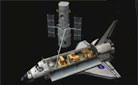
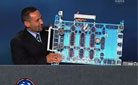
John Grunsfeld and Andrew Feustel successfully installed a powerful new $132 million camera and a critical science data computer on the Hubble Space Telescope Thursday during a roller coaster of a spacewalk that brought to mind the "Perils of Pauline" history of the fabled observatory.
"Well, we got to Hubble and gave Hubble a hug," Grunsfeld said from the airlock when the work was done. "But in traditional Hubble fashion, Hubble threw us a few curves. But I think it's really a testament to the whole team on board here and of course, on the ground ... that we were able to overcome them and that we have a Wide Field Camera 3 in the telescope, which will help unlock the secrets of the universe, and a new scientific instrument command and data handling (computer)."
The spacewalk began at 8:52 a.m. and ended with airlock re-pressurization at 4:12 p.m. for a duration of seven hours and 20 minutes. It was the 19th EVA devoted to servicing the Hubble Space Telescope, the first of five planned by the Atlantis astronauts, the sixth for Grunsfeld and the first for Feustel. Total Hubble EVA servicing time now stands at 136 hours and 30 minutes. Grunsfeld's total EVA time through six spacewalks stands at 44 hours and 52 minutes, putting him eighth on the list of most experienced spacewalkers.
The first item on the agenda today was installation of the new Wide Field Camera 3 in place of the aging Wide Field and Planetary Camera 2, which was installed during the first Hubble servicing mission in 1993. Attempting to remove the old camera, Feustel initially was unable to loosen a critical bolt holding the instrument in place.
Grunsfeld then returned to the shuttle's airlock and retrieved a torque limiter, allowing Feustel to safely apply more force. The bolt would not budge. Flight controllers then approved a last-ditch contingency plan, telling Feustel to remove the torque limiter and apply more elbow grease to the socket.
"That A latch was at a higher torque than we could release initially," said lead spacewalk officer Tomas Gonzales-Torres. "So we used a multi-torque limiter that has different settings we can use. ... The one they nominally use is maxed out at 38 foot pounds. We have a contingency one that can be set at 45 foot pounds. So that's what the crew did, they went and retrieved the contingency MTL and unfortunately, that still was not high enough."
It was a make-or-break moment of high drama. But when Feustel applied the socket directly to the bolt and leaned into it, the bolt finally released.
"The failure torque of the bolt was 57.1 foot pounds," said Gonzales-Torres. "Without a torque limiter in place to limit the torque, the crew could impart, there was a possibility that you shear the bolt. If that happened, the instrument was going to be staying inside. WFPC 2 would stay inside the telescope and we would re-engage the connectors and the ground strap. It would still be a functional instrument, we just would not be able to get it out."
Project scientist David Leckrone said engineers were thrilled when the bolt finally broke free.
"I don't normally reveal my age and I'm not going to here, but I can tell you I'm five years older now than I was when I came to work this morning," he told reporters later. "Many of us have worked on WFC 3 on the order of 10 years or more, a lot of blood, sweat and tears. And we were concerned we might not end up with our highest priority instrument in."
Taking off the torque limiter was "near the bottom of the list" of contingency procedures, Leckrone said. When the bolt was freed, "there was just a huge outburst of elation and emotion."
From that point on, the camera swap out went smoothly and the Wide Field Camera 3 was successfully installed.
"We can sleep pretty well tonight, knowing that's been accomplished," Leckrone said.
Installation of the replacement science instrument command and data handling system computer also went smoothly. Grunsfeld then attached a grapple fixture to the base of the telescope to enable a future crew, or a robotic spacecraft, to drive Hubble safely into the atmosphere at the end of its life.
The final items on the agenda were installation of door latches intended to make it easier to access critical hardware during the crew's upcoming spacewalks. Two of four "latch over center kits," or LOCKS, were installed, but the astronauts had problems getting two others attached. Instead, one different type of latch and a door restraint were attached to accomplish the same purpose.
"It's been a tremendous day for the HST program," said Hubble Program Manager Preston Burch. "This is a huge accomplishment, our first EVA day in more than seven years, and the crew were able today to accomplish two out of our three highest priority items."

Additional coverage for subscribers:
 VIDEO:
WEDNESDAY NIGHT UPDATE FROM HST CONTROL CENTER PLAY VIDEO:
WEDNESDAY NIGHT UPDATE FROM HST CONTROL CENTER PLAY
VIDEO:
WEDNESDAY'S MISSION MANAGEMENT TEAM UPDATE PLAY
VIDEO:
WEDNESDAY'S MISSION STATUS BRIEFING PLAY
VIDEO:
TIME-LAPSE OF MOVING HUBBLE INTO PAYLOAD BAY PLAY
VIDEO:
SHUTTLE ATLANTIS' ROBOT ARM CAPTURES HUBBLE PLAY
VIDEO:
FIRST UP CLOSE VIEWS OF HUBBLE IN 7 YEARS PLAY
VIDEO:
SHUTTLE ENGINE FIRING TO CIRCULARIZE ORBIT PLAY
VIDEO:
INSIGHTFUL OVERVIEW OF ATLANTIS' MISSION PLAY
VIDEO:
NARRATED PREVIEW ANIMATION OF HUBBLE RENDEZVOUS PLAY

VIDEO:
FLIGHT DAY 2 HIGHLIGHTS MOVIE PLAY
VIDEO:
TUESDAY NIGHT UPDATE FROM HST CONTROL CENTER PLAY
VIDEO:
TUESDAY'S MISSION MANAGEMENT TEAM UPDATE PLAY
VIDEO:
SLOW-MOTION OF DEBRIS THAT APPARENTLY HIT TILES PLAY
VIDEO:
TILE DAMAGE FOUND DURING INSPECTIONS PLAY
VIDEO:
CAPCOM CALLS CREW ABOUT MINOR DAMAGE PLAY
VIDEO:
TUESDAY'S MISSION STATUS BRIEFING PLAY
VIDEO:
PREVIEW ANIMATION OF HEAT SHIELD INSPECTIONS PLAY
VIDEO:
FLIGHT DAY 1 HIGHLIGHTS MOVIE PLAY
VIDEO:
THE FULL STS-125 LAUNCH EXPERIENCE PLAY
VIDEO:
LAUNCH REPLAY: EXTERNAL TANK CAMERA PLAY
VIDEO:
FOOTAGE OF FUEL TANK AFTER JETTISON PLAY
VIDEO:
LAUNCH REPLAY: FRONT CAMERA PLAY
VIDEO:
LAUNCH REPLAY: BEACH TRACKER PLAY
VIDEO:
LAUNCH REPLAY: PAD PERIMETER PLAY | HI-DEF
VIDEO:
LAUNCH REPLAY: UCS-23 TRACKER PLAY
VIDEO:
LAUNCH REPLAY: CAMERA CS-1 PLAY
VIDEO:
LAUNCH REPLAY: CAMERA CS-2 PLAY
VIDEO:
LAUNCH REPLAY: CAMERA CS-6 PLAY
VIDEO:
LAUNCH REPLAY: VAB ROOF PLAY
VIDEO:
LAUNCH REPLAY: PRESS SITE PLAY
VIDEO:
LAUNCH REPLAY: WEST TOWER PLAY
VIDEO:
LAUNCH REPLAY: CAMERA 009 PLAY
VIDEO:
LAUNCH REPLAY: CAMERA 041 PLAY
VIDEO:
LAUNCH REPLAY: CAMERA 049 PLAY
VIDEO:
LAUNCH REPLAY: CAMERA 050 PLAY
VIDEO:
LAUNCH REPLAY: CAMERA 051 PLAY
VIDEO:
LAUNCH REPLAY: CAMERA 060 PLAY
VIDEO:
LAUNCH REPLAY: CAMERA 061 PLAY
VIDEO:
LAUNCH REPLAY: CAMERA 063 PLAY
VIDEO:
LAUNCH REPLAY: CAMERA 070 PLAY
VIDEO:
LAUNCH REPLAY: CAMERA 071 PLAY
VIDEO:
SPACE SHUTTLE ATLANTIS BLASTS OFF! PLAY | HI-DEF
VIDEO:
STS-125 POST-LAUNCH NEWS CONFERENCE PLAY
VIDEO:
INSIDE MISSION CONTROL DURING LAUNCH PLAY
VIDEO:
NARRATED ANIMATION OF DAY 1 INSPECTIONS PLAY
VIDEO:
FINAL PRE-LAUNCH READINESS POLLS CONDUCTED PLAY
VIDEO:
SHUTTLE'S CREW MODULE HATCH CLOSED FOR FLIGHT PLAY
VIDEO:
MISSION SPECIALIST MEGAN MCARTHUR BOARDS PLAY
VIDEO:
PILOT GREG JOHNSON BOARDS ATLANTIS PLAY
VIDEO:
MISSION SPECIALIST JOHN GRUNSFELD BOARDS PLAY
VIDEO:
SHUTTLE COMMANDER SCOTT ALTMAN BOARDS PLAY
VIDEO:
CREW DEPARTS QUARTERS FOR LAUNCH PAD PART 1 | PART 2
VIDEO:
ASTRONAUTS DON SPACESUITS FOR LAUNCH PLAY
VIDEO:
TIME-LAPSE OF LAUNCH PAD GANTRY ROLLBACK PLAY
VIDEO:
HUBBLE'S FUTURE AFTER ATLANTIS SERVICING PLAY
VIDEO:
TOP DISCOVERIES MADE BY HUBBLE TELESCOPE PLAY
VIDEO:
THE ROLLERCOASTER LIFE OF HUBBLE PLAY
VIDEO:
WHAT IS HUBBLE'S PLACE IN HISTORY? PLAY
VIDEO:
ENTERTAINING LOOK AT ATLANTIS' CREW PLAY
VIDEO:
HUBBLE SPACE TELESCOPE HISTORY MOVIE PLAY
VIDEO:
A TRIBUTE TO THE CAMERA THAT SAVED HUBBLE PLAY
VIDEO:
HUBBLE TELESCOPE PROGRAM BRIEFING FROM SUNDAY PLAY
VIDEO:
SUNDAY'S COUNTDOWN STATUS AND WEATHER UPDATE PLAY
VIDEO:
THE STS-125 PRE-LAUNCH NEWS CONFERENCE PLAY
VIDEO:
SATURDAY'S COUNTDOWN STATUS AND WEATHER UPDATE PLAY
VIDEO:
ASTRONAUTS ARRIVE AT THE CAPE FOR LAUNCH PLAY
VIDEO:
FRIDAY'S COUNTDOWN STATUS AND WEATHER UPDATE PLAY
VIDEO:
NEWS BRIEFING FOLLOWING FLIGHT READINESS REVIEW PLAY
VIDEO:
REFRESHER BRIEFING: THE STS-125 MISSION PLAY
VIDEO:
REFRESHER BRIEFING: HUBBLE SPACE TELESCOPE PLAY
VIDEO:
REFRESHER BRIEFING: THE SEVEN ASTRONAUTS PLAY
VIDEO:
BIOGRAPHY MOVIE OF ATLANTIS' CREW PLAY
VIDEO:
INTERVIEW WITH COMMANDER SCOTT ALTMAN PLAY | '09 UPDATE
VIDEO:
INTERVIEW WITH PILOT GREG JOHNSON PLAY
VIDEO:
INTERVIEW WITH MS1 MIKE GOOD PLAY
VIDEO:
INTERVIEW WITH MS2 MEGAN MCARTHUR PLAY
VIDEO:
INTERVIEW WITH MS3 JOHN GRUNSFELD PLAY | '09 UPDATE
VIDEO:
INTERVIEW WITH MS4 MIKE MASSIMINO PLAY | '09 UPDATE
VIDEO:
INTERVIEW WITH MS5 DREW FEUSTEL PLAY | '09 UPDATE
VIDEO:
SHUTTLE ATLANTIS ARRIVES AT LAUNCH PAD 39A PLAY | HI-DEF
VIDEO:
THE SUN RISES ON ATLANTIS DURING ROLLOUT PLAY | HI-DEF
VIDEO:
ATLANTIS EMERGES FROM ASSEMBLY BUILDING PLAY | HI-DEF
VIDEO:
ORBITER VERTICAL FOR MATING TO FUEL TANK PLAY | HI-DEF
VIDEO:
ATLANTIS MOVES BACK TO ASSEMBLY BUILDING PLAY | HI-DEF
VIDEO:
ATLANTIS LEAVES LAUNCH PAD 39A IN OCT. PLAY
VIDEO:
TIMELAPSE OF THE ROLLBACK GETTING UNDERWAY PLAY
VIDEO:
ASTRONAUTS REHEARSE QUICK SHUTTLE EXIT PLAY
VIDEO:
CREW BOARDS ATLANTIS FOR MOCK COUNTDOWN PLAY
VIDEO:
ASTRONAUTS DON SUITS FOR PRACTICE COUNTDOWN PLAY
VIDEO:
CREW'S TRAINING ON ESCAPE BASKETS AND BUNKER PLAY
VIDEO:
ASTRONAUTS CHAT WITH PRESS AT LAUNCH PAD PLAY
VIDEO:
CREW TEST DRIVES EMERGENCY PAD ESCAPE VEHICLE PLAY
VIDEO:
COMMANDER AND PILOT PRACTICE LANDING APPROACHES PLAY
VIDEO:
CREW ARRIVES AT CAPE FOR PRACTICE COUNTDOWN PLAY
VIDEO:
COMMENTS FROM COMMANDER AFTER ARRIVING PLAY
VIDEO:
AERIAL VIEWS OF ATLANTIS AND ENDEAVOUR PLAY | HI-DEF
VIDEO:
PRE-FLIGHT BRIEFING: THE STS-125 MISSION PLAY
VIDEO:
PRE-FLIGHT BRIEFING: THE FIVE SPACEWALKS PLAY
VIDEO:
PRE-FLIGHT BRIEFING: THE SEVEN ASTRONAUTS PLAY
VIDEO:
PRE-FLIGHT BRIEFING: NASA LEADERSHIP PLAY
VIDEO:
PRE-FLIGHT BRIEFING: SHUTTLE PROGRAM BOSS PLAY
VIDEO:
PRE-FLIGHT BRIEFING: HUBBLE OVERVIEW PLAY
VIDEO:
PRE-FLIGHT BRIEFING: HUBBLE SCIENCE PLAY
VIDEO:
SHUTTLE ARRIVES ATOP PAD 39A PLAY
VIDEO:
ATLANTIS EMERGES FROM VEHICLE ASSEMBLY BUILDING PLAY
VIDEO:
TIME-LAPSE MOVIE OF ATLANTIS' ROLLOUT TO LAUNCH PAD PLAY
VIDEO:
ATLANTIS ROLLS FROM HANGAR TO VAB PLAY
VIDEO:
ATLANTIS LIFTED INTO PLACE FOR ATTACHMENT PLAY
MORE:
STS-125 VIDEO COVERAGE
NEW!
HIGH DEFINITION VIDEO
SUBSCRIBE NOW
|