Spaceflight Now +

|
|
|
|
|
Subscribe to Spaceflight Now Plus for access to our extensive video collections!
 How do I sign up? How do I sign up?
Video archive
Mercury science
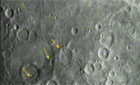
Scientists present imagery and instrument data collected by NASA's MESSENGER spacecraft during its flyby of Mercury.
Play
STS-98: Destiny lab
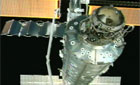
NASA's centerpiece module of the International Space Station -- the U.S. science laboratory Destiny -- rode to orbit aboard Atlantis in February 2001.
Play | X-Large
Earth science update

NASA leaders discuss the agency's Earth science program and preview major activities planned for 2008, including the launch of three new satellites.
Part 1 | Part 2
STS-97: ISS gets wings
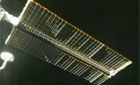
Mounting the P6 power truss to the station and unfurling its two solar wings were the tasks for Endeavour's STS-97 mission.
Play | X-Large
STS-92: ISS construction
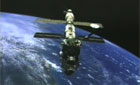
The Discovery crew gives the station a new docking port and the box-like Z1 truss equipped with gyroscopes and a communications antenna.
Play | X-Large
Expedition 17 crew
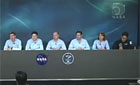
Pre-flight news briefing with the crew members to serve aboard the space station during various stages of Expedition 17.
Play
STS-106: Making the station a home in space
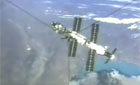
Following the Russian Zvezda service module's long-awaited launch to serve as the station's living quarters, Atlantis pays a visit in September 2000 to prepare the complex for arrival of the first resident crew.
Play | X-Large
STS-101: ISS service call
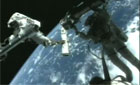
An impromptu maintenance mission to the new space station was flown by Atlantis in May 2000. The astronauts narrate their mission highlights.
Play | X-Large
STS-96: First ISS docking

The first shuttle mission to dock with the fledgling International Space Station came in May 1999 when Discovery linked up with the two-module orbiting outpost. The STS-96 crew tells story of the mission.
Play | X-Large
STS-88: Building the ISS
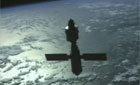
Construction of the International Space Station commenced with Russia's Zarya module launching aboard a Proton rocket and shuttle Endeavour bringing up the American Unity connecting hub. STS-88 crew narrates highlights from the historic first steps in building the outpost.
Play | X-Large
Become a subscriber
More video
|
|
|
|
|
|
Cassini spacecraft finds rhythm in Saturn's rings
NASA/JPL NEWS RELEASE
Posted: January 31, 2008
Order can be found in the most unexpected places, as demonstrated by our neighbor three planets down. Two of Saturn's rings have been found by NASA's Cassini spacecraft to contain orderly lines of densely grouped, boulder-size icy particles that extend outward across the rings like ripples from a rock dropped in a calm pond.

For an Earth observer on May 3, 2005, the Cassini spacecraft appeared to pass behind the rings, then Saturn, then the rings again (the red line). Credit: NASA/JPL/Space Science Institute
See larger image here
|
"Imagine going to a town that stretches from San Francisco to Los Angeles and seeing buildings spaced the same distance apart on every block," said Cassini radio science team member Essam Marouf of San Jose State University, San Jose, Calif. "All of these groups of particles within the rings are very close together, and the space between them is extremely small, only 100 to 250 meters (320 feet to 820 feet) wide, depending on where they are in the ring."
Normally, the distances between particles change with their velocity. In the case of Saturn's rings, the distances between these ring particles stay relatively equal even though their velocities may change. This type of pattern is completely new, according to Marouf.
"This particular feature is the smallest and most detailed of anything seen in Saturn's rings so far," Marouf said. "In the chaotic environment of the rings, to find such regularity in the most cramped areas is nothing short of amazing." The regular structure can only be found in locations where particles are densely packed together, such as the B ring and the innermost part of the A ring.
The unexpected pattern within Saturn's rings may give scientists some new ideas of what to expect from other similar planets and solar systems.
The pattern was detected when the radio on board the Cassini spacecraft sent out three signals toward Earth. The signals crossed the Saturn's rings, and their frequencies were separated by scattering from the ring particles. Once the signals were captured by Earth-based antennas of NASA's Deep Space Network, Cassini scientists saw a regular pattern in the received signal frequencies.
"The signals showed that the particle groups were arranged in an unexpectedly regular formation that had 'rhythm within the rings of Saturn,'" said Marouf. "Each particle is in its own orbit, and sometimes they collide and move apart as their velocities change. As a result, you have particles bunched together into dense groups that extend across the ring in harmony with each other."
The pattern of particles is described as an enormously extended natural diffraction grating. A diffraction grating has parallel lines like a picket fence; when light hits this fence, it separates according to wavelength, from ultraviolet to infrared light.
The same thing happened when Cassini's radio signals hit the fencelike pattern of ring particles. The signals, sent out in 2005, were meant to capture a complete view of the rings.
This research appears as a cover story in the Dec. 28 issue of Geophysical Research Letters.
|
|
|
|
|