|
 |

|
||||
|
|
||||
|
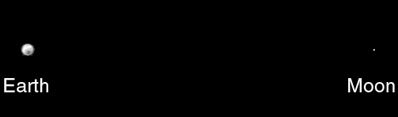
Mars Odyssey takes snapshot of Earth NASA/JPL NEWS RELEASE Posted: April 24, 2001 NASA's Mars Odyssey spacecraft turned its multipurpose camera homeward last week and took its first picture -- a shot of a faint crescent Earth -- as the spacecraft heads off toward its destination, the planet Mars. The image was taken as part of the calibration process for the Thermal Emission Imaging System (THEMIS), the camera system that is one of three science instrument packages on the spacecraft. The imaging system will study the Martian surface in both the visible and the infrared and will help determine what minerals are present. It also will map landscapes on Mars at resolutions comparable to that of NASA's Landsat Earth observing satellite.
The visible image shows the night side of the crescent Earth looking toward the South Pole. Taken at the same time, the infrared image measures temperature, showing its "night- vision" capability to observe Earth even in the dark. "The instrument measured a low surface temperature of minus 50 degrees Celsius (minus 58 degrees Fahrenheit) for Antarctica in winter, and a high of 9 degrees Celsius (48.2 degrees Fahrenheit) at night in Australia. These temperatures agree remarkably well with observed temperatures of minus 63 degrees Celsius at Vostok Station in Antarctica, and 10 degrees Celsius in Australia. Thus we demonstrated that the instrument can accurately measure temperatures, even from a distance of more than 3 million kilometers (2 million miles)," Christensen said. These observations of Antarctica provide an excellent test for how the imaging system will perform at Mars, where afternoon temperatures are comparable to those in the winter night at Earth's South Pole. The Antarctic continent, which was uncharted less than 100 years ago, was the last landmass observed by Odyssey as it left Earth on its way to Mars. The images were taken on April 19.
"Not only was this a successful calibration of the instrument, it demonstrated that we can accurately point the spacecraft, and it put the team members through their paces," said David A. Spencer, the Odyssey mission manager at NASA's Jet Propulsion Laboratory (JPL), Pasadena, CA. Today, Odyssey is 4,639,830 kilometers (2,883,050 miles) from Earth and traveling at a speed of 3.3 kilometers per second (7,474 miles per hour) relative to the Earth. The Mars Odyssey mission is managed by the Jet Propulsion
Laboratory for NASA's Office of Space Science, Washington,
DC. JPL is a division of the California Institute of
Technology, Pasadena. The Odyssey spacecraft was built by
Lockheed Martin Astronautics, Denver, CO. The THEMIS
instrument was built by Raytheon Santa Barbara Remote
Sensing, Santa Barbara, CA, and is operated by Arizona State
University, Tempe.
|
|
|
|

|
||