|
|
|

|
|
SpaceX: Falcon 9 engine test aborted before ignition BY STEPHEN CLARK SPACEFLIGHT NOW Posted: March 9, 2010 
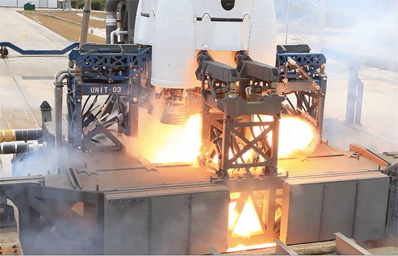
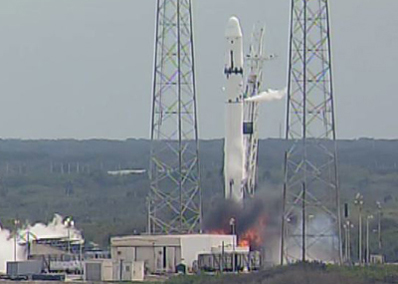
A ball of orange flame and cloud of black smoke gushed from the base of the Falcon 9 rocket Tuesday afternoon, but the countdown was aborted a split-second before the booster's nine engines ignited for a crucial ground test.
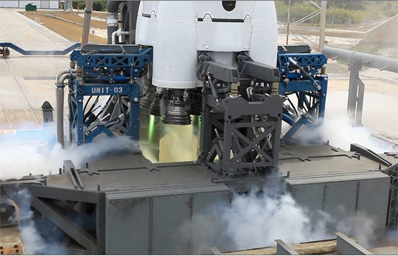
"Given that this was our first abort event on this pad, we decided to scrub for the day to get a good look at the rocket before trying again," the statement said. "Everything looks great at first glance." A SpaceX spokesperson said the company will try for another hotfire test in three or four days. The cutoff sequence was initiated Tuesday after an unspecified problem with the first stage spin start system, an early step in the engine ignition sequence. "We encountered a problem with the spin start system and aborted nominally," the statement said. "As part of the abort, we close the pre-valves to isolate the engines from the propellant tank and purge the residual propellants. The brief flames seen on the video are burn off of [liquid oxygen] and kerosene on the pad. The engines did not ignite and there was no engine fire." Engineers drained the Falcon 9 rocket propellant tanks and safed the vehicle and launch pad. "Preliminary review shows all other systems required to reach full ignition were within specification," SpaceX officials said. "All other pad systems worked nominally." The military-run Eastern Range took part in Tuesday's countdown, successfully completing holdfire, C-band, S-band telemetry and simulated flight termination system checks. "We completed helium, liquid oxygen and fuel loads to within tenths of a percent of T-zero conditions," the SpaceX release said. The rocket passed all tests until the countdown was called off at T-minus 2 seconds, according to SpaceX.
SpaceX planned to fire the nine Merlin 1C engines up to full power -- more than 800,000 pounds of thrust -- for about 3.5 seconds to verify the 15-story rocket and its associated ground systems were ready for flight. The Falcon 9 rocket has spent the last two weeks on the pad at Cape Canaveral's Complex 40 undergoing testing in preparation for the static fire, which is considered a major milestone in the booster's development. Earlier tests included a practice countdown Feb. 26, during which the SpaceX launch team loaded kerosene and liquid oxygen propellants into the rocket. SpaceX will not discuss a specific target launch date for the new vehicle, but the Air Force says the mission is booked on the range for March 22. SpaceX officials say the launch is more likely to occur some time in April. The 154-foot-tall rocket is the cornerstone of SpaceX's efforts to design, build and launch new vehicles to carry pressurized cargo, and perhaps astronauts, to the International Space Station. A test unit of the company's Dragon capsule is bolted to the top of the Falcon 9 currently on the launch pad. The Dragon is SpaceX's unmanned cargo freighter that could visit the space station on a test flight by the end of 2010. Schedules call for the Dragon to make its first operational flight for NASA in 2011. But the Falcon 9's debut launch is purely a demonstration mission for SpaceX, and the company did not provide updates during Tuesday's engine test. The inaugural Falcon 9 flight will place the Dragon spacecraft in a circular orbit about 155 miles high. The empty Dragon will remain attached to the Falcon 9 second stage after achieving orbit.
SpaceX was awarded a $1.6 billion NASA contract in December 2008 for up to 12 operational Falcon 9 and Dragon launches with logistics for the space station. Orbital Sciences will conduct nine resupply flights of its Taurus 2 and Cygnus vehicles launching from Wallops Island, Va. The Falcon 9 and Dragon are positioned to carry future astronaut crews to the outpost under NASA's proposal to solicit commercial providers for human transportation to low Earth orbit. Other rockets, including the Atlas 5, Delta 4 and Taurus 2 vehicles, could also bid for commercial crew contracts. SpaceX says the Falcon 9 and Dragon can be modified to safely deliver astronauts to space by 2013, or about two-and-a-half years after winning a contract. |
|
|
|
|
|||||||||||||||||||||||
|
MISSION STATUS CENTER |
|||||||||||||||||||||||||||||