|
|
|
|
BY JUSTIN RAY Follow the countdown and launch of the ULA Atlas 5 rocket carrying a classified payload for the National Reconnaissance Office. Reload this page for the latest on the launch.
THURSDAY, AUGUST 16, 2007 The liquid hydrogen leak was traced to a valve that failed to close during a long coast phase between burns of the Centaur upper stage's RL10 engine. The RL10 conducted two burns during the June 15 launch to place a classified payload into orbit for the National Reconnaissance Office, the government agency that operates the nation's spy satellite fleet. The open valve allowed the supercold liquid hydrogen to slowly leak from the Centaur stage, and the second burn of the RL10 was cut short four seconds early when the rocket ran out of fuel. Read our full story.
TUESDAY, JUNE 19, 2007 "The Centaur upper stage for the Atlas 5 NROL-30 mission had a minor performance anomaly. Per our regular process to assess any issues with launch hardware and performance, the Space and Missile Systems Center, together with United Launch Alliance, is leading a technical team assessment into the cause of the performance anomaly," a Launch and Range Systems spokesperson said. "The assessment is in its initial stages of development, to include milestones leading to completion. We expect to have a better schedule assessment by the end of the week." It is presumed that the second burn of the Centaur upper stage ended prematurely, resulting in a lower than planned orbit. However, that has not been confirmed by launch officials.
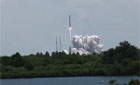
FRIDAY, JUNE 15, 2007 The hush-hush launch of the $82 million Atlas 5 booster for the secretive National Reconnaissance Office began at 11:12 a.m. EDT with a thunderous departure from Cape Canaveral's Complex 41. The 20-story bronze and white rocket, riding nearly a million pounds of thrust, gracefully rose into a clear blue sky with a golden tail of flame flickering behind. The United Launch Alliance vehicle maneuvered into a northeast trajectory and raced up the U.S. East Coast toward a highly inclined orbit. Satellite observers say the liftoff was timed to put the vehicle on a course to deliver its clandestine cargo near the same orbital plane that is home to aging ocean surveillance spacecraft launched in 1996, giving strong evidence that the Atlas was hauling up replacement craft. Four minutes into the flight, the kerosene-fueled first stage completed its planned firing of the Russian-designed RD-180 main engine and separated. The cryogenic Centaur upper stage then ignited for a lengthy burn to place the rocket into an initial parking orbit around Earth. The rocket's two-piece nose cone shrouding the payload was jettisoned just after the Centaur engine started. The normal public release of commentary from the telemetry engineers during the flight was cut, under orders from the NRO, just after the fairing was shed. Officials had said in advance that this unusual information blackout would happen. Events during the rest of the flight were announced by a ULA spokesman. He called shutdown of the Centaur's first burn about 19 minutes after liftoff, which marked the beginning of a quiet coast period through space lasting roughly an hour. Centaur then reignited for a second firing designed to place the payload into the desired orbit. There was no indication from ULA that anything had gone awry during the orbit boost, and at T+plus 84 minutes and 42 seconds, deployment of the payload was announced with applause from the launch control center. The launch was hailed as a success, marking 81 in a row for the Atlas rocket family dating back to 1993 and giving the Atlas 5 a perfect ten-for-ten record. But news detracting from the launch outcome arrived eight hours after liftoff in the form a press statement from the Space and Missile Systems Center at Los Angeles Air Force Base saying the Centaur had experienced a problem during the flight. "The Centaur upper stage had a technical anomaly which resulted in minor performance degradation. The Space and Missile Systems Center has initiated a standard review process," the statement read. The press release, which still called the launch successful, said the payload had separated from the rocket normally and "the NRO is confident in the performance of its mission." The public was left to speculate about the nature and the seriousness of the anomaly, whether the Centaur had fallen short of the targeted orbit because of an early engine shutdown or if some other problem had struck the rocket. Media questions were referred to the Air Force, which did not immediately respond to requests for additional clarification. Friday's launch was the first time the new-generation Atlas 5 had carried a payload for the NRO, which is the government agency responsible for the nation's fleet of spy satellites. The trade magazine Aviation Week and Space Technology reported in April that the Atlas would deploy a pair of formation-flying reconnaissance satellites. Three similar sets of the spacecraft for the Naval Ocean Surveillance System, or NOSS, have been launched aboard Atlas 2AS and Atlas 3 rockets in recent years. The spacecraft are thought to be capable of detecting radio transmissions from ships to precisely pinpoint a vessel's location. Tracking suspicious ships in the post-9/11 era has become a critical role of the NOSS network, experts say. "The need to track thousands of civilian ships worldwide has intensified given the potential for seemingly harmless shipping to be involved in nuclear, chemical or biological terrorist operations. Also, potential adversaries like China and Iran are demonstrating new sea-based tactics and capabilities that must be monitored," Aviation Week reported. The naval theme for Friday's flight extended to the mission emblem. The giant logo on the rocket's nose cone featured an historic sailing ship with cannons at the ready. What impact, if any, Friday's problem will have on the upcoming Atlas launch schedule remains to be seen. The next launch is scheduled for the evening of August 11 from Cape Canaveral to loft the first Wideband Global SATCOM spacecraft for the Air Force. The 6.5-ton satellite, built by Boeing, is a sophisticated geostationary communications spacecraft to serve U.S. military forces. Another Atlas 5 mission for the NRO is targeted for liftoff October 5 from the Cape.
2345 GMT (7:45 p.m. EDT) The report also said the spacecraft, believed to be a pair of ocean surveillance satellites, likely have enough onboard fuel to reach the proper orbit on their own. Whether those unplanned maneuvers would limit the satellites' useful life isn't known.
2329 GMT (7:29 p.m. EDT) "Space vehicle separation was nominal and the NRO is confident in the performance of its mission. Atlas booster (first stage) performance was nominal. The Centaur upper stage had a technical anomaly which resulted in minor performance degradation. The Space and Missile Systems Center has initiated a standard review process." Despite this news, the Air Force still calls the launch a success. The extent of the problem and any other details were not released. During the live broadcast of the flight today, United Launch Alliance called the mission a success and did not indicate any problems. The normal public release of commentary from the telemetry engineers during the flight was cut just after jettison of the rocket's payload fairing under orders from the NRO. Events during the rest of the flight were announced by a ULA spokesman.
2100 GMT (5:00 p.m. EDT) "Today's success also underscores the importance to our country's National Security Space enterprise of having and sustaining a reliable and experienced launch capability for these critical missions."
1636 GMT (12:36 p.m. EDT) This is the 81st consecutive successful launch for the Atlas rocket family dating back to 1993. And now the Atlas 5 is ten-for-ten in successful missions. Today's launch was the first time the next-generation Atlas 5 has carried a payload for the NRO, which is the secretive government agency responsible for the nation's fleet of spy satellites. "This launch directly supports NRO's goals of being the foundation for global situational awareness and for providing intelligence information on timelines responsive to user needs," the Air Force's pre-launch press release said. "The NRO develops and operates unique and innovative overhead reconnaissance systems and conducts intelligence-related activities essential for U.S. national security." The trade magazine Aviation Week and Space Technology reported in April that the Atlas would deploy a pair of ocean surveillance satellites. The next Atlas 5 launch is scheduled for the evening of August 11 from Cape Canaveral. The vehicle will loft the first Wideband Global SATCOM spacecraft for the Air Force. The 6.5-ton satellite, built by Boeing, is a sophisticated geostationary communications spacecraft to serve U.S. military forces. Another Atlas 5 mission for the NRO is targeted for liftoff October 5 from the Cape.
1634 GMT (12:34 p.m. EDT)
1633 GMT (12:33 p.m. EDT)
1629 GMT (12:29 p.m. EDT)
1552 GMT (11:52 a.m. EDT)
1532 GMT (11:32 a.m. EDT)
1530 GMT (11:30 a.m. EDT)
1528 GMT (11:28 a.m. EDT)
1524 GMT (11:24 a.m. EDT)
1520 GMT (11:20 a.m. EDT)
1518 GMT (11:18 a.m. EDT)
1517 GMT (11:17 a.m. EDT)
1516 GMT (11:16 a.m. EDT)
1515 GMT (11:15 a.m. EDT)
1514 GMT (11:14 a.m. EDT)
1513 GMT (11:13 a.m. EDT)
1512 GMT (11:12 a.m. EDT)
1511 GMT (11:11 a.m. EDT)
1510 GMT (11:10 a.m. EDT)
1509 GMT (11:09 a.m. EDT)
1508 GMT (11:08 a.m. EDT)
1507 GMT (11:07 a.m. EDT)
1505 GMT (11:05 a.m. EDT)
1500 GMT (11:00 a.m. EDT)
1459 GMT (10:59 a.m. EDT)
1454 GMT (10:54 a.m. EDT)
1451 GMT (10:51 a.m. EDT)
1450 GMT (10:50 a.m. EDT)
1449 GMT (10:49 a.m. EDT)
1448 GMT (10:48 a.m. EDT)
1444 GMT (10:44 a.m. EDT)
1439 GMT (10:39 a.m. EDT)
1435 GMT (10:35 a.m. EDT) This flight is the fifth to use the rocket's 401 configuration, which is the basic version of Atlas 5. The Common Core Booster first stage is outfitted with the RD-180 main engine, the Centaur upper stage has a single RL10 cryogenic engine and the payload shroud is the four-meter diameter option. No strap-on solid-fuel boosters are used by the 401 rocket. Previous 401 launches were the first two Atlas 5 missions, with the European Hot Bird 6 and Greek Hellas Sat communications spacecraft, NASA's Mars Reconnaissance Orbiter and the Air Force's Space Test Program 1 flight. The Air Force says the Atlas 5 rocket for today's NROL-30 mission is valued at $82 million.
1430 GMT (10:30 a.m. EDT)
1424 GMT (10:24 a.m. EDT)
1422 GMT (10:22 a.m. EDT)
1417 GMT (10:17 a.m. EDT)
1415 GMT (10:15 a.m. EDT)
1414 GMT (10:14 a.m. EDT)
1412 GMT (10:12 a.m. EDT)
1411 GMT (10:11 a.m. EDT)
1407 GMT (10:07 a.m. EDT)
1405 GMT (10:05 a.m. EDT)
1404 GMT (10:04 a.m. EDT)
1400 GMT (10:00 a.m. EDT)
1359 GMT (9:59 a.m. EDT)
1357 GMT (9:57 a.m. EDT)
1354 GMT (9:54 a.m. EDT)
1350 GMT (9:50 a.m. EDT)
1349 GMT (9:49 a.m. EDT)
1347 GMT (9:47 a.m. EDT)
1340 GMT (9:40 a.m. EDT)
1335 GMT (9:35 a.m. EDT)
1334 GMT (9:34 a.m. EDT)
1332 GMT (9:32 a.m. EDT)
1328 GMT (9:28 a.m. EDT)
1327 GMT (9:27 a.m. EDT)
1324 GMT (9:24 a.m. EDT)
1318 GMT (9:18 a.m. EDT)
1307 GMT (9:07 a.m. EDT) The liquid oxygen -- chilled to Minus-298 degrees F -- will be consumed during the launch by the Centaur's single RL10 engine along with liquid hydrogen to be pumped into the stage a little later in the countdown. The Centaur will perform a pair of firings today to deliver the NRO payload into the desired orbit.
1300 GMT (9:00 a.m. EDT)
1255 GMT (8:55 a.m. EDT)
1254 GMT (8:54 a.m. EDT) Clocks have one more built-in hold planned at T-minus 4 minutes. That pause will last 10 minutes during which time the final "go" for launch will be given. All remains targeted for liftoff at 11:04 a.m. EDT from Cape Canaveral's Complex 41.
1250 GMT (8:50 a.m. EDT) Just prior to the poll, the ULA launch conductor briefed his team on countdown procedures before entering into the final two hours.
1230 GMT (8:30 a.m. EDT) Right now, all weather conditions are "go." The launch time outlook calls for scattered clouds at 2,500 and 25,000 feet, good visibility, easterly winds of 12 gusting to 18 knots, a temperature of 79-80 degrees F and isolated coastal showers. Should the launch be delayed to Saturday for some reason, the odds of acceptable weather fall to only a 40 percent chance. A greater amount of cloud cover and thunderstorms are in the forecast for tomorrow. Saturday's outlook includes scattered clouds at 2,500 and 10,000 feet, a deck of broken clouds at 25,000 feet, good visibility, southeasterly winds of 14 gusting to 20 knots, a temperature of 79-80 degrees F and isolated showers and thunderstorms.
1229 GMT (8:29 a.m. EDT)
1224 GMT (8:24 a.m. EDT)
1219 GMT (8:19 a.m. EDT)
1210 GMT (8:10 a.m. EDT) A little while ago, a C-band test with the Range was completed. This system allows the Air Force-controlled Eastern Range to track the Atlas 5 rocket during launch.
1204 GMT (8:04 a.m. EDT)
1145 GMT (7:45 a.m. EDT)
1130 GMT (7:30 a.m. EDT)
1045 GMT (6:45 a.m. EDT) Immediately following yesterday's disappointing scrub, the launch team drained the cryogenic propellants from the rocket and safed systems as part of a normal 24-hour countdown turnaround. A fresh count picked up this morning, aiming for a liftoff at 11:04 a.m. A technical problem with Range Safety equipment caused the first launch attempt to be called off. "The postponement was due to concerns about persistent problems with a mandatory component of the Eastern Range's command destruct system during the countdown," an Air Force spokesman said. Read our earlier status center coverage.
|
|
|
|
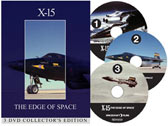
Apollo 1 DVD This tribute DVD features over 4.5 hours of material about the Apollo 1 tragedy and the crewmembers lost in the pad accident.U.S. Freedom 7 DVD ![]() In May 1961 the United States launched astronaut Alan Shepard on a 15-minute suborbital flight to begin America's manned spaceflight program. This DVD contains over 2 1/2 hours of rare material on the flight of Freedom 7. U.S. X-15 DVD set ![]() The X-15 rocket plane pushed the boundaries of aerospace with trips out to mach 6.7 and altitudes of over 350,000 feet. This 3 DVD collection contains over 10 hours of material, the largest ever assembled and will allow you to experience the proud legacy of the X-15. U.S. - U.K. - E.U. - Worldwide |
||||||||||||||||||||||||||||||||||||||||
|
INDEX | PLUS | NEWS ARCHIVE | LAUNCH SCHEDULE ASTRONOMY NOW | STORE ADVERTISE © 2010 Spaceflight Now Inc. |
||||||||||||||||||||||||||||||||||||||||||||||