Note: The animation images used below are NOT meant to depict the classified NRO payload being launched on this mission. Rather it is to illustrate a generic Atlas cargo.
| T-00:02.4 |
Engine start |
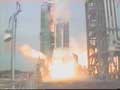 |
Atlas booster and sustainer engines are ignited and undergo checkout prior to liftoff. |
|
| T+00:00 |
Launch |
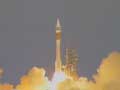 |
The Atlas 2AS rocket, designated AC-160, lifts off and begins a vertical rise away from Space Launch Complex-3 East at Vandenberg Air Force Base, California. |
|
| T+0:00:57.3 |
Air-lit SRB Ignition |
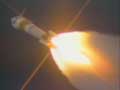 |
The remaining two solid rocket boosters strapped to the Atlas are ignited once onboard computer software determines the two ground-start SRBs have burned out, about two seconds earlier. |
|
| T+0:01:59.3 |
Jettison Ground-Lit SRBs |
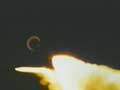 |
The two spent solid rocket boosters that were ignited on the ground are jettisoned to fall into the Pacific Ocean. They had burned out at T+plus 55 seconds, but remained attached until the vehicle passes into preset safety zone. |
|
| T+0:02:02.3 |
Jettison Air-Lit SRBs |
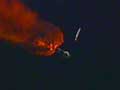 |
Computer software will determine the air-start solid rocket boosters have burned all their propellant. Their jettison from the Atlas vehicle occurs about nine seconds later to fall into the Pacific. |
|
| T+0:02:47.3 |
Booster Engine Cutoff |
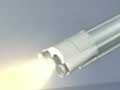 |
BECO occurs when axial acceleration of 5.0 g is obtained on the rocket. Sustainer engine provides the continued boost toward orbit for the Atlas rocket. |
|
| T+0:02:50.4 |
Jettison Booster Package |
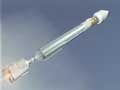 |
The bottom engine structure with the two booster engine nozzles is separated from the Atlas vehicle. |
|
| T+0:03:39.0 |
Jettison Payload Fairing |
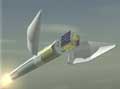 |
The 14-foot diameter aluminum payload fairing that protected the NRO payload during launch is separated once heating levels drop to predetermined limits. |
|
| T+0:04:33.6 |
Sustainer Engine Cutoff |
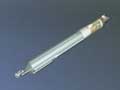 |
SECO is commanded once minimum residual propellant is sensed inside the Atlas booster stage. |
|
| T+0:04:35.6 |
Atlas/Centaur Separation |
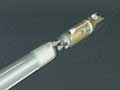 |
The Atlas booster stage separates from the Centaur upper stage. Over the next few seconds, the Centaur engine liquid hydrogen and liquid oxygen systems are readied for ignition. |
|
| T+0:04:52.2 |
Centaur Engine Start 1 |
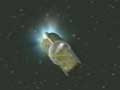 |
MES 1, the longer of the two Centaur firings begins to inject the upper stage and NRO spacecraft into a parking orbit around Earth. |
|
T+0:10:38.9
to 0:10:41.0 |
Centaur Engine Cutoff 1 |
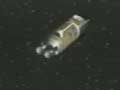 |
MECO 1 occurs the Centaur engines are shutdown, arriving in a planned parking orbit. The vehicle begins a lengthy coast period before the second Centaur burn near apogee. The exact time of MECO depends on when liftoff occurs during launch window. |
|
T+1:09:11.3
to 1:09:52.7 |
Centaur Engine Start 2 |
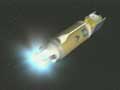 |
The burn will propel the NRO satellite into the intended transfer orbit. Ignition occurs as the rocket nears the high point of the parking orbit. The exact time of engine start depends on when liftoff occurs. |
|
T+1:09:27.5
to 1:10:11.0 |
Centaur Engine Cutoff 2 |
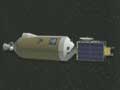 |
At MECO 2, the vehicle should be in the required transfer orbit. The rocket's guidance computer will command the burn's conclusion once the proper orbit is achieved. Moments later, the stage begins aligning to the satellite separation attitude. |
|
T+1:13:10.5
to 1:13:53.9 |
Spacecraft Separation |
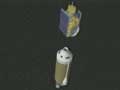 |
The classified payload for the U.S. National Reconnaissance Office is released into orbit from the Centaur upper stage to complete the AC-160 launch. |