Spaceflight Now Home


The Mission


Rocket: Ariane 5 ES
Payload: ATV 1
Date: March 8/9, 2008
Time: 11:03 p.m. EST
(0403 GMT on 9th)
Site: ELA-3, Kourou, French Guiana

Mission Status Center

Our ATV preview

Our program story

Countdown timeline

Launch timeline

Mission timeline

ATV video coverage

Ariane archive


Spaceflight Now +


Subscribe to Spaceflight Now Plus for access to our extensive video collections!
How do I sign up?
Video archive

Introduction to ATV
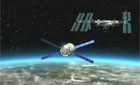
Preview the maiden voyage of European's first Automated Transfer Vehicle, named Jules Verne. The craft will deliver cargo to the International Space Station.

 Full coverage

Launching on the shuttle
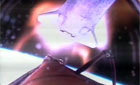
Video cameras on the boosters and tank, plus a cockpit camera show what the shuttle and its astronauts experience during the trek to space.

 Full coverage

STS-120: In review

The STS-120 crew narrates highlights from its mission that delivered the station's Harmony module and moved the P6 power truss.

 Full presentation
 Mission film

STS-123: TCDT
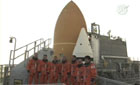
The STS-123 astronauts complete their countdown dress rehearsal at Kennedy Space Center.

 Full coverage

STS-123: To the pad
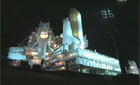
Endeavour travels to pad 39A in the overnight hours of Feb. 18 in preparation for liftoff on STS-123.

 Play | X-Large

Progress docking
The 28th Progress resupply ship launched to the International Space Station successfully docks.

 Play

NASA '09 budget

NASA officials present President Bush's proposed Fiscal Year 2009 budget for the agency.

 Play

Become a subscriber
More video


BY SPACEFLIGHT NOW

Follow the launch of Arianespace's Ariane 5 rocket carrying the first Automated Transfer Vehicle, named Jules Verne, bound for the International Space Station. Reload this page for the latest on the mission.

Spaceflight Now Plus
Additional coverage for subscribers:
VIDEO: ARIANE 5 ROCKET BLASTS OFF WITH JULES VERNE PLAY
VIDEO: ROLLOUT OF ARIANE 5 ROCKET TO LAUNCH PAD PLAY
VIDEO: DETAILED ATV OVERVIEW BRIEFING PLAY
VIDEO: NARRATED ATV LAUNCH-TO-DOCKING ANIMATION PLAY
VIDEO: NARRATED ANIMATION OF THE RENDEZVOUS AND DOCKING PLAY
VIDEO: NARRATED ANIMATION OF ATV PERFORMING REBOOST PLAY
VIDEO: NARRATED ANIMATION OF ATV REENTRY PLAY
SUBSCRIBE NOW

SATURDAY, MARCH 29, 2008

Europe's revolutionary Jules Verne cargo ship pulled within 2.2 miles of the international space station Saturday, proving the craft's long-range rendezvous systems are ready for next week's docking with the complex.

Read our full story.

THURSDAY, MARCH 27, 2008

Europe's Jules Verne space transporter fired its engines early Thursday to leave a parking orbit and begin moving toward the complex, setting up for the first of two rendezvous dress rehearsals this weekend.

Read our full story.

A detailed rendezvous timeline is available here.

WEDNESDAY, MARCH 19, 2008

Europe's Jules Verne space station servicing ship entered a holding pattern early Wednesday to wait out the shuttle Endeavour's visit to the outpost scheduled to wrap up early next week.

Read our full story.

SUNDAY, MARCH 16, 2008

Europe's Jules Verne space station transporter successfully completed a critical engine firing early Friday, proving it can steer clear of the orbiting complex if struck by a major problem during final approach.

Read our full story.

TUESDAY, MARCH 11, 2008

Jules Verne propulsion system glitch resolved
Two days after an electronics box cut off a quarter of a European space station resupply ship's propulsion system, controllers successfully revived the suspect command chain and tested its ability to work properly during a series of engine firings Tuesday.

Read our full story.

SUNDAY, MARCH 9, 2008

An electronics box on Europe's first cargo ship shut down a propulsion system command chain responsible for a quarter of the space-age delivery truck's maneuvering thrusters, officials said Sunday.

Read our full story.

0655 GMT (1:55 a.m. EST)

A first-of-a-kind robotic space transporter with a futuristic autopilot control system journeyed into orbit early Sunday, embarking on a mission to track down the international space station using the most advanced space technology ever developed in Europe.

The 42,700-pound cargo-laden spaceship, named Jules Verne for the visionary 19th century science fiction writer, was tucked inside Europe's workhorse Ariane 5 rocket for the dramatic blastoff.

Read our launch story.

Spaceflight Now Plus
Additional coverage for subscribers:
VIDEO: ARIANE 5 ROCKET BLASTS OFF WITH JULES VERNE PLAY
VIDEO: ROLLOUT OF ARIANE 5 ROCKET TO LAUNCH PAD PLAY
SUBSCRIBE NOW

0555 GMT (12:55 a.m. EST)

"The launch of Jules Verne by Ariane 5 ES marks an important step on the way to ESA becoming an indispensable ISS partner with the ATV, the heaviest and most complex spacecraft ever built by ESA," said Jean-Jacques Dordain, ESA's Director General.

"This is the result of close cooperation between Member States, European industry, Arianespace, CNES, ESA staff and international partners. But the next steps of Jules Verne's mission are as important when it comes to attaining the objective of automatic rendezvous and docking with the ISS, controlled from the ATV Control Centre in Toulouse. In meeting that objective, we will have made great strides in consolidating the role of ESA in the future international exploration of the solar system."

0552 GMT (12:52 a.m. EST)

"Last month, with the docking of Columbus, Europe got its own flat in the ISS building, with the launch of the first ATV, we now have our own delivery truck," said Daniel Sacotte, ESA's Director for Human Spaceflight, Microgravity and Exploration.

"We have become co-owners of the ISS, now we are about to become fully-fledged partners in running it. With the ATV we will be servicing the ISS by delivering cargo qnd providing orbital reboost."

0543 GMT (12:43 a.m. EST)

"ATV is fully alive," says European astronaut Jean-Francois Clervoy.

0541 GMT (12:41 a.m. EST)

The solar arrays have successfully deployed. All four wings unfolded their panels to power the Automated Transfer Vehicle during its life in space.

0535 GMT (12:35 a.m. EST)

The solar array deployment sequence has begun.

0519 GMT (12:19 a.m. EST)

The next critical milestone occurs about 20 minutes from now when the ATV's four power-generating solar arrays are extended.

0514 GMT (12:14 a.m. EST)

Jean-Yves Le Gall, the Arianespace CEO, says tonight's injection into orbit of ATV was perfect. This is the Ariane 5 rocket's 33rd successful mission. The heavy-lift vehicle's string of consecutive successful launches now stands at 23 dating back to 2002.

0509 GMT (12:09 a.m. EST)

Cheers of joy and relief have erupted in the Jupiter Control Center! The ATV has arrived in space for its maiden mission.

0509 GMT (12:09 a.m. EST)

Plus+66 minutes, 42 seconds. SPACECRAFT SEPARATION! Europe's new robotic space cargo freighter, the Automated Transfer Vehicle named Jules Verne, has been released from the Ariane 5 rocket's upper stage. The supply ship has embarked on its voyage to the International Space Station, with docking scheduled for April 3.

0509 GMT (12:09 a.m. EST)

Plus+66 minutes. Standing by for ATV to be cast free from its launcher.

0507 GMT (12:07 a.m. EST)

Plus+64 minutes, 30 seconds. Arianespace says the desired orbital velocity has been achieved by the Ariane 5 rocket.

0506 GMT (12:06 a.m. EST)

Plus+63 minutes, 30 seconds. Over the next few minutes, the upper stage will perform a pointing maneuver to provide antenna alignment between on the Automated Transfer Vehicle and NASA's orbiting Tracking and Data Relay Satellite System.

Separation of ATV from the Ariane 5 rocket is anticipated three minutes from now.

0506 GMT (12:06 a.m. EST)

Plus+63 minutes. Altitude is 270.5 km, velocity is 7.45 km/sec.

0505 GMT (12:05 a.m. EST)

Plus+62 minutes, 41 seconds. Shutdown 2. The Ariane 5 rocket's upper stage has accomplished its second firing for the launch of Jules Verne. This completes the powered phase of tonight's launch.

0505 GMT (12:05 a.m. EST)

Plus+62 minutes, 10 seconds. Ignition! The Ariane 5 rocket's upper stage is firing for a second time to deliver the Automated Transfer Vehicle to its injection orbit.

0504 GMT (12:04 a.m. EST)

Plus+61 minutes. Communications have resumed with the Ariane 5 rocket via the next downrange tracking station. Altitude is 269 km, velocity is 7.41 km/sec.

0503 GMT (12:03 a.m. EST)

Plus+60 minutes. Now one hour since the Ariane 5 rocket roared off its jungle launch pad in South America. The rocket is heading off the southeastern coast of Australia where the upper stage engine will fire to life again in about two minutes.

0458 GMT (11:58 p.m. EST Sat.)

Plus+55 minutes. Typical Ariane launches feature just one firing of the upper stage to propel satellites into orbit. But tonight's mission requires a two-step process to place the ATV into the desired orbit. And, in fact, the spent stage will perform a third burn later to deorbit itself.

0445 GMT (11:45 p.m. EST Sat.)

Plus+42 minutes. Ariane has about 20 minutes remaining in this quiet coast.

0433 GMT (11:33 p.m. EST Sat.)

Plus+30 minutes. During this phase of the flight, the Ariane rocket is out of ground tracking station coverage. Telemetry from the vehicle during the upcoming engine firing and deployment of ATV will resume when it flies within range of the Invercargill station in New Zealand.

Ariane also has available stations tonight in Dongara and Adelaide, Australia

0428 GMT (11:28 p.m. EST Sat.)

Plus+25 minutes. The rocket is passing high over Europe now, with its track to continue above Asia and then head southeasterly. The next engine burn will occur once the vehicle passes over Australia.

0422 GMT (11:22 p.m. EST Sat.)

Plus+19 minutes. Altitude is 148.0 km, velocity is 7.56 km/sec.

0420 GMT (11:20 p.m. EST Sat.)

Plus+17 minutes, 14 seconds. Shutdown 1. The upper stage's Aestus engine has completed its first firing of the night, shutting down after reaching a preliminary parking orbit.

0419 GMT (11:19 p.m. EST Sat.)

Plus+16 minutes, 30 seconds. Altitude is 146.2 km, velocity is 7.5 km/sec.

0418 GMT (11:18 p.m. EST Sat.)

Plus+15 minutes, 30 seconds. Altitude is 146.6 km, velocity is 7.45 km/sec.

0417 GMT (11:17 p.m. EST Sat.)

Plus+14 minutes, 30 seconds. Altitude is 147.4 km, velocity is 7.38 km/sec.

0417 GMT (11:17 p.m. EST Sat.)

Plus+14 minutes. The burn continues in progress. The upper stage headed for a 260 by 137 km parking orbit where it will coast for 45 minutes until the Aestus engine reignites to circularize the orbit for deployment of the ATV.

0415 GMT (11:15 p.m. EST Sat.)

Plus+12 minutes, 30 seconds. Altitude is 148 km, velocity is 7.24 km/sec.

0414 GMT (11:14 p.m. EST Sat.)

Plus+11 minutes, 30 seconds. About six minutes remaining in this burn. The upper stage's Aestus engine is consuming hydrazine and nitrogen tetroxide storable propellants to continue the push toward orbit.

0413 GMT (11:13 p.m. EST Sat.)

Plus+10 minutes, 30 seconds. Altitude is 143 km, velocity is 7.11 km/sec.

0412 GMT (11:12 p.m. EST Sat.)

Plus+9 minutes, 10 seconds. The upper stage of Ariane 5 rocket -- the storable propellant stage -- has ignited for the first of its two burns required to place the ATV spacecraft into the intended orbit tonight.

0412 GMT (11:12 p.m. EST Sat.)

Plus+9 minutes. The main cryogenic stage's Vulcain engine has cut off. The spent stage has separated for its fall back into the atmosphere over the Atlantic Ocean to burn up, impacting off the Iberian Peninsula.

0411 GMT (11:11 p.m. EST Sat.)

Plus+8 minutes. Coming up on main stage shutdown in about one minute. Altitude is 130 km, velocity is 5.8 km/sec.

0410 GMT (11:10 p.m. EST Sat.)

Plus+7 minutes. Altitude is 135 km, velocity is 4.79 km/sec.

0409 GMT (11:09 p.m. EST Sat.)

Plus+6 minutes. Altitude is 138 km, velocity is 4 km/sec. The rocket is flying through the portion of launch in which its trajectory levels out in order to gain speed.

0408 GMT (11:08 p.m. EST Sat.)

Plus+5 minutes. Altitude is 134 km, velocity is 3.19 km/sec.

0407 GMT (11:07 p.m. EST Sat.)

Plus+4 minutes, 15 seconds. No problems have been reported in the Ariane's initial ascent tonight. Altitude is 124 km, velocity is 2.7 km/sec.

0406 GMT (11:06 p.m. EST Sat.)

Plus+3 minutes, 33 seconds. The protective payload fairing enclosing the ATV spacecraft has been separated from the Ariane 5.

0405 GMT (11:05 p.m. EST Sat.)

Plus+2 minutes, 45 seconds. Altitude is 81 km, velocity is 2.1 km/sec.

0405 GMT (11:05 p.m. EST Sat.)

Plus+2 minutes, 28 seconds. The solid rocket boosters have been jettisoned from the Ariane 5 rocket's core stage. The liquid-fueled Vulcain main engine continues to fire to propel the vehicle and its satellite payload to space.

0405 GMT (11:05 p.m. EST Sat.)

Plus+2 minutes. Altitude is 46 km, velocity is 1.9 km/sec.

0404 GMT (11:04 p.m. EST Sat.)

Plus+1 minute, 30 seconds. About one minute left in the burn by the solid rocket boosters. The boosters are providing 90 percent of the liftoff thrust.

0404 GMT (11:04 p.m. EST Sat.)

Plus+1 minute, 20 seconds. Altitude is 19 km, velocity is 0.7 km/sec.

0404 GMT (11:04 p.m. EST Sat.)

Plus+60 seconds. The Ariane 5 has roared away from the South American jungle launch site in Kourou, French Guiana. The combined power generated by the twin solid rocket boosters and liquid-fueled main stage engine are propelling this heaviest-ever Ariane payload into the overcast nighttime sky. The rocket has gone transsonic and is nearing the region of maximum aerodynamic pressure.

0403 GMT (11:03 p.m. EST Sat.)

Plus+40 seconds. The launcher has completed its pitch and roll maneuvers to align with the northeastward trajectory to reach the International Space Station's orbit.

0403 GMT (11:03 p.m. EST Sat.)

LIFTOFF! Liftoff of the Ariane 5 rocket with Jules Verne, Europe's first Automated Transfer Vehicle to supply the International Space Station!

0402 GMT (11:02 p.m. EST Sat.)

Minus-40 seconds. Ariane 5 is running on internal power.

0402 GMT (11:02 p.m. EST Sat.)

Minus-1 minute. A fast-paced series of events leading to launch will begin at Minus-37 seconds when the automated ignition sequence is started. The water suppression system at the launch pad will start at Minus-30 seconds. At Minus-22 seconds, overall control will be given to the onboard computer. The Vulcain main engine will be readied for ignition with hydrogen chilldown starting at Minus-18 seconds. The residual hydrogen burn flares will fire beneath the Vulcain engine at Minus-6 seconds to burn away any free hydrogen gas. At Minus-3 seconds, onboard systems take over and the two inertial guidance systems go to flight mode. Vulcain main engine ignition occurs at Minus-0 seconds with checkout between Plus+4 and 7 seconds. If there are no problems found, the solid rocket boosters are ignited at Plus+7.0 seconds for liftoff at Plus+7.3 seconds.

0401 GMT (11:01 p.m. EST Sat.)

Minus-2 minutes. The Vulcain main engine supply valves are being opened. And the ground valves for engine chilldown are being closed.

0400 GMT (11:00 p.m. EST Sat.)

Minus-3 minutes. The scheduled launch time has been loaded into the rocket's main computer system. The main stage tank pressures should now be at flight level.

0359 GMT (10:59 p.m. EST Sat.)

Minus-4 minutes. Pressurization is now underway for the main cryogenic stage's liquid oxygen and hydrogen tanks. Also, final pyrotechnic arming is starting.

0358 GMT (10:58 p.m. EST Sat.)

Minus-5 minutes and counting. Status panels in the control center remain green, indicating all systems are "go" for liftoff tonight.

0357 GMT (10:57 p.m. EST Sat.)

Minus-6 minutes and counting. Liquid hydrogen and liquid oxygen supplies of the main cryogenic stage are being verified at flight level. Also, the pyrotechnic line safety barriers are being armed.

0356 GMT (10:56 p.m. EST Sat.)

Minus-7 minutes and counting. The Synchronized Sequence has started. Computers are now in control of this automated final phase of the launch countdown to prepare the rocket and ground systems for liftoff. There are three computers running the countdown -- one aboard the Ariane 5 and two redundant computers at the launch complex.

0353 GMT (10:53 p.m. EST Sat.)

Minus-10 minutes. Tonight's launch opportunity is just an instant in time. Unlike most Ariane launches that feature launch windows that can extend as much as a couple hours, this ATV mission has just one second for the rocket to blast off. The precise launch time is 0403:04 GMT.

0348 GMT (10:48 p.m. EST Sat.)

Minus-15 minutes. All systems remain "go" for liftoff, says the status board in the Jupiter Control Center.

0343 GMT (10:43 p.m. EST Sat.)

Minus-20 minutes. This will be the 181st launch of Europe's Ariane rocket family dating back to Christmas Eve of 1979, the 37th for the heavy-lift Ariane 5 vehicle and the first this year.

The Ariane 5 rocket has 32 successful missions to its credit, including the last 22 consecutive flights since 2002. If all goes well tonight, this would mark the rocket's 33rd success and 23rd in a row.

0337 GMT (10:37 p.m. EST Sat.)

Minus-26 minutes. "It's raining, but it is not serious," an ESA spokesperson just reported.

0333 GMT (10:33 p.m. EST Sat.)

Minus-30 minutes. The Synchronized Sequence is being prepped for activation. This computer-run sequence assumes control of the countdown at the Minus-7 minute mark to perform the final tasks to place the rocket and pad systems in launch configuration.

At Minus-4 seconds, the rocket's onboard computer will take over control of main engine start, health checks of the powerplant and solid rocket booster ignition commanding for liftoff.

0328 GMT (10:28 p.m. EST Sat.)

Minus-35 minutes and counting. Rain is falling on the Ariane 5 rocket at the ELA-3 launch pad. Launch officials repeatedly have said over the past couple of days that rain would not be a constraint to liftoff.

0323 GMT (10:23 p.m. EST Sat.)

Minus-40 minutes and counting. The countdown is on schedule for liftoff at 0403 GMT from French Guiana on South America's northeastern coastline. The Ariane 5 rocket's main stage has been fueled with more than 55,000 pounds of liquid hydrogen and 330,000 pounds of liquid oxygen propellants. All systems are reported "go" for flight at this time.

0303 GMT (10:03 p.m. EST Sat.)

Minus-60 minutes. Current weather conditions in Kourou are "go" for launch and the liftoff time forecast is favorable too.

0233 GMT (9:33 p.m. EST Sat.)

Minus-90 minutes. Just an hour-and-a-half until the Automated Transfer Vehicle will be on its way to space atop the powerful Ariane 5 booster. At this point in the countdown, filling of the liquid hydrogen and liquid oxygen tanks should be in the topping mode and the final software loading to the ATV should be underway.

Coming up in about 20 minutes, continuity checks between the Ariane 5 rocket and the tracking, telemetry relay and commanding systems will be verified.

0130 GMT (8:30 p.m. EST Sat.)

The countdown is proceeding smoothly with no technical problems being reported with the Ariane 5 rocket, ATV spacecraft or the ground support network. Fueling operations remain in work.

0100 GMT (8:00 p.m. EST Sat.)

A gallery of pre-flight photos showing the Ariane 5 rocket poised on the launch pad for its mission to haul Jules Verne into orbit has been posted here.

0010 GMT (7:10 p.m. EST Sat.)

Super-cold liquid hydrogen and liquid oxygen rocket fuel is being pumped into the main stage of the Ariane 5 vehicle as countdown clocks continue ticking toward the 0403 GMT liftoff time overnight.

The cryogenic propellants will be consumed by the rocket's Vulcain main engine during the first nine minutes of the launch, sending the upper stage and attached ATV freighter on tonight's long journey to orbit.

SATURDAY, MARCH 8, 2008

The countdown began on schedule today in Kourou for the overnight blastoff of the Ariane 5 rocket to propel the first Automated Transfer Vehicle into orbit.

Preparations are underway for fueling the rocket's main stage with super cold liquid hydrogen and liquid oxygen this evening.

Officials have been monitoring the wet weather around the launch site. But they remain hopeful conditions will be acceptable for liftoff at 0403:04 GMT Sunday (11:03:04 p.m. EST Saturday).

FRIDAY, MARCH 7, 2008

The Ariane 5 rocket rolled to the launch pad under a blanket of gray clouds Friday afternoon, achieving one of the final steps before tomorrow night's scheduled launch of the first European cargo ship to the international space station.

The 174-foot-tall rocket and its mobile launch table were wheeled on dual rail tracks from the final assembly building to the ELA-3 launch pad at the Guiana Space Center. The 1.7-mile journey, which began at 1845 GMT (1:45 p.m. EST), took about 90 minutes to complete, according to Arianespace.

See photos of the rollout here.

The move was postponed from earlier in the day due to problems with a mobile air conditioning unit used to cool Jules Verne, Europe's first Automated Transfer Vehicle to service the international space station.

The unit helps control the ultra-clean environment inside the Ariane 5's payload fairing, which envelopes the nearly 43,000-pound spacecraft.

Workers at the French Guiana launch site spent the rest of the afternoon hooking up fluid lines and electrical cables to connect the rocket to the pad's ground infrastructure.

Forecasters are calling for cloudy skies and a slight chance of thunderstorms at launch time tomorrow night, with temperatures around 75 degrees Fahrenheit. The Ariane 5 is scheduled to lift off at 0403:04 GMT Sunday (11:03:04 p.m. EST Saturday), the precise instant Earth's rotation carries the space base into the space station's orbital path.

The rocket can only launch at the prescribed time because it must optimize its trajectory to rendezvous with the station, according to ESA officials.

Ariane 5 weather rules prohibit launch if lightning is in the vicinity of the pad. There must also be good visibility and no rain at the pad during launch, according to an ESA spokesperson.

Jules Verne must get off the ground by Monday morning, European time, or else face at least a two-day delay. The launch time would be approximately 0339 GMT Monday (11:39 p.m. EDT Sunday night).

The stand down would make room for the launching of the shuttle Endeavour early Tuesday. The shuttle and the ATV can't launch at the same time because both vehicles use S-band communications through NASA's network of tracking satellites.

Ariane 5 launch attempts could resume by Tuesday night if Endeavour launches on time.

The final countdown will get underway Saturday at about 1633 GMT (11:33 a.m. EST). Fueling should begin about four hours prior to launch, or shortly after midnight GMT (7:00 p.m. EST). See our countdown timeline here.

The Ariane 5's upper stage will fire two times to inject Jules Verne into a circular 162-mile-high orbit. Deployment of the robotic space tug is scheduled just shy of the mission's 67-minute mark. See our launch timeline here.

After a unique three-week approach to the space station, the ATV is slated to dock to the complex on April 3. See our mission preview and timeline.

THURSDAY, MARCH 6, 2008

The Launch Readiness Review concluded today with approval for tomorrow's rollout of the Ariane 5 rocket from its assembly building to the ELA-3 pad at the Guiana Space Center. Activities remain on track for Saturday night's countdown.

"This ... review is quite an exhaustive and transparent process where all the specialists and managers give an account of all their actions; it is very healthy and reassuring for ESA and especially the ATV team. We are very pleased with all the efforts and incredible work done by Arianespace and CNES in Kourou," said Daniel Sacotte, ESA Director of Human Spaceflight, Microgravity and Exploration Programmes.

WEDNESDAY, MARCH 5, 2008

Lauded as the most advanced spaceship ever built by Europeans, a robotic orbital freighter named Jules Verne will blast off from the Atlantic coast of South America this weekend to begin a three-week chase of the international space station.

Liftoff of Jules Verne at the tip of a beefed up Ariane 5 rocket is set for 0403:04 GMT Sunday (11:03:04 p.m. EST Saturday) from the European-controlled spaceport in Kourou, French Guiana. The launch is timed for the instant Earth's rotation brings the ELA-3 launch pad into the space station's orbital path.

Read our preview story.

This weekend's launch of Europe's Jules Verne cargo ship and last month's addition of the Columbus laboratory module to the international space station are cornerstone achievements in the continent's growth in space, according to senior officials.

"Europe historically is the exploring continent, and we want to make sure that we don't just explore the world but we explore the world beyond us," said Alan Thirkettle, ESA international space station program manager.

Long an operator of highly successful science probes, the European Space Agency is becoming a full-time participant in human spaceflight this year.

Read our program story.

Copyright 2008 SpaceflightNow.com, all rights reserved.


Expedition 18 patch & pin
The official embroidered patch and lapel pin for the International Space Station Expedition 18 crew is now available to from our stores.
 U.S. STORE: PATCH | PIN
 WORLD STORE: PATCH | PIN

NASA 50th anniversary pin
Celebrate the 50th anniversary of the U.S. space agency NASA with this lapel pin featuring the official logo.
  U.S. STORE
  WORLDWIDE STORE


Columbus mission patch
The official astronaut embroidered patch of Atlantis' STS-122 mission that launched the Columbus science lab in February is available to U.S. customers from our store.
 U.S. STORE

Project Orion
The Orion crew exploration vehicle is NASA's first new human spacecraft developed since the space shuttle a quarter-century earlier. The capsule is one of the key elements of returning astronauts to the Moon.
 U.S. STORE


Apollo patches
The Apollo Patch Collection: Includes all 12 Apollo mission patches plus the Apollo Program Patch. Save over 20% off the Individual price.
 U.S. STORE


INDEX | PLUS | NEWS ARCHIVE | LAUNCH SCHEDULE
ASTRONOMY NOW | STORE

ADVERTISE

© 2008 Pole Star Publications Ltd