BY SPACEFLIGHT NOW

Follow the launch of Arianespace's Ariane 5 rocket carrying the Skynet 5A and INSAT 4B communications spacecraft. Reload this page for the latest on the mission.
SUNDAY, MARCH 11, 2007

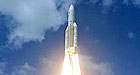
A brilliant flash of light and a roar of thunderous sound signaled the start of Arianespace's first space launch of the year Sunday evening, and the rocket's two communications payloads were delivered to space just a half-hour later.
Read our full story.
2247 GMT (6:47 p.m. EDT)

The next Ariane 5 launch is scheduled for early May carrying the European ASTRA 1L television broadcasting satellite and the American Galaxy 17 communications spacecraft, Le Gall says.
2240 GMT (6:40 p.m. EDT)

"I have very, very happy to share with all of you this new success of Ariane 5 ECA," Arianespace CEO Jean-Yves Le Gall said in post-flight speeches to the launch customers gathered in the command center watching today's flight.
2236 GMT (6:36 p.m. EDT)

The Ariane 5 rocket has achieved its 28th successful launch and the 17th in a row.
2233 GMT (6:33 p.m. EDT)

Plus+30 minutes, 56 seconds. SPACECRAFT SEPARATION! The Indian INSAT 4B television broadcasting satellite has been released from the Ariane 5 rocket's upper stage, completing today's launch.
2233 GMT (6:33 p.m. EDT)

Plus+30 minutes. Altitude is 1,600 km, velocity is 8.5 km/sec.
2232 GMT (6:32 p.m. EDT)

Plus+29 minutes, 25 seconds. The the barrel-like "Sylda" payload adapter between Skynet 5A and the INSAT 4B satellites has been jettisoned. This has exposed INSAT 4B for its upcoming release from the rocket.
2231 GMT (6:31 p.m. EDT)

Plus+28 minutes, 30 seconds. Altitude is 1,300 km, velocity is 8.8 km/sec.
2229 GMT (6:29 p.m. EDT)

Plus+26 minutes, 45 seconds. SPACECRAFT SEPARATION! The British Skynet 5A military communications spacecraft has been released from the Ariane 5 rocket's upper stage.
2227 GMT (6:27 p.m. EDT)

Plus+24 minutes, 41 seconds. The new cryogenic upper stage for Ariane 5 has just shut down to complete its burn for today's launch. The stage will prepare for deployment of the two satellite payloads a few minutes from now.
2227 GMT (6:27 p.m. EDT)

Plus+24 minutes. Altitude is 593 km, velocity is 9.24 km/sec.
2226 GMT (6:26 p.m. EDT)

Plus+23 minutes. Less than two minutes of propulsion remains in the upper stage. Altitude is 485 km, velocity is 9.0 km/sec.
2225 GMT (6:25 p.m. EDT)

Plus+22 minutes. Altitude is 402 km, velocity is 8.9 km/sec.
2224 GMT (6:24 p.m. EDT)

Plus+21 minutes. Altitude is 333 km, velocity is 8.76 km/sec.
2223 GMT (6:23 p.m. EDT)

Plus+20 minutes. Just under five minutes remain in this firing of the upper stage.
2222 GMT (6:22 p.m. EDT)

Plus+19 minutes, 30 seconds. Altitude is 261 km, velocity is 8.5 km/sec.
2221 GMT (6:21 p.m. EDT)

Plus+18 minutes. Altitude is 214 km, velocity is 8.27 km/sec.
2220 GMT (6:20 p.m. EDT)

Plus+17 minutes. Altitude is 192 km, velocity is 8.1 km/sec.
2219 GMT (6:19 p.m. EDT)

Plus+16 minutes. The vehicle is beginning its upward climb again. Altitude is 178 km, velocity is 7.9 km/sec.
2218 GMT (6:18 p.m. EDT)

Plus+15 minutes. Altitude is 169 km, velocity is 7.77 km/sec.
2217 GMT (6:17 p.m. EDT)

Plus+14 minutes. Altitude is 164 km, velocity is 7.6 km/sec.
2215 GMT (6:15 p.m. EDT)

Plus+12 minutes. Altitude is 160 km, velocity is 7.2 km/sec.
2214 GMT (6:14 p.m. EDT)

Plus+11 minutes. Altitude is 159 km, velocity is 7.1 km/sec. The cryogenic upper stage motor continues to fire.
2213 GMT (6:13 p.m. EDT)

Plus+10 minutes. Altitude is 157 km, velocity is 6.9 km/sec. The cryogenic upper stage motor continues to fire.
2212 GMT (6:12 p.m. EDT)

Plus+9 minutes, 6 seconds. The upper stage of the Ariane 5 ECA rocket is up and burning to accelerate the payload into geosynchronous transfer orbit.
2211 GMT (6:11 p.m. EDT)

Plus+8 minutes, 59 seconds. The main cryogenic stage's Vulcain engine has cut off and the spent stage has separated. It will fall back into the atmosphere prior to completing an orbit of Earth.
2211 GMT (6:11 p.m. EDT)

Plus+8 minutes. Coming up on main stage shutdown in about one minute. Altitude is 152 km, velocity is 5.6 km/sec.
2210 GMT (6:10 p.m. EDT)

Plus+7 minutes. The rocket's climb has leveled out as designed. This temporary trajectory is needed in order to gain speed. Altitude is 156 km, velocity is 4.58 km/sec.
2209 GMT (6:09 p.m. EDT)

Plus+6 minutes. Altitude is 156 km, velocity is 3.7 km/sec.
2208 GMT (6:08 p.m. EDT)

Plus+5 minutes. The main stage's Vulcain 2 engine continues to fire as it burns a mixture of liquid hydrogen and liquid oxygen rocket fuel. Altitude is now 148 km, with a speed of 3.0 km/sec.
2207 GMT (6:07 p.m. EDT)

Plus+4 minutes, 30 seconds. Ariane 5 is 140 km in altitude and traveling at 2.78 km/sec.
2206 GMT (6:06 p.m. EDT)

Plus+3 minutes, 20 seconds. Separation of the rocket's nose cone has been confirmed.
2206 GMT (6:06 p.m. EDT)

Plus+3 minutes. Trajectory is right on course. The rocket is 96 km in altitude and traveling at 2.1 km/sec.
2205 GMT (6:05 p.m. EDT)

Plus+2 minutes, 27 seconds. The solid rocket boosters have been jettisoned from the Ariane 5 rocket's core stage. The liquid-fueled Vulcain 2 main engine continues to fire to propel the vehicle and its satellite payload to space.
2204 GMT (6:04 p.m. EDT)

Plus+1 minute, 30 seconds. The vehicle is 24 km in altitude. About one minute left in the burn by the solid rocket boosters. The boosters are providing 90 percent of the liftoff thrust.
2204 GMT (6:04 p.m. EDT)

Plus+60 seconds. The vehicle is on the proper trajectory as it rides the power of the twin solid rocket boosters and main stage liquid-fueled engine. The vehicle is 10 km in altitude already.
2203 GMT (6:03 p.m. EDT)

Plus+35 seconds. Pitch and roll maneuvers has been performed by the Ariane 5 vehicle to position itself on the correct eastward heading bound for geosynchronous transfer orbit carrying the Skynet 5A military communications satellite and the INSAT 4B
direct-to-home broadcasting craft.
2203 GMT (6:03 p.m. EDT)

LIFTOFF! Liftoff of the 175th Ariane rocket! And the vehicle has cleared the tower.
2202 GMT (6:02 p.m. EDT)

Minus-50 seconds. The vehicle is switching to internal power.
2202 GMT (6:02 p.m. EDT)

Minus-1 minute. Final events leading to launch will begin at Minus-37 seconds when the automated ignition sequence is started. The water suppression system at the launch pad will start at Minus-30 seconds. At Minus-22 seconds, overall control will be given to the onboard computer. The residual hydrogen burn flares will fire beneath the Vulcain engine at Minus-6 seconds to burn away any free hydrogen gas. At Minus-3 seconds, onboard systems take over and the two inertial guidance systems go to flight mode. Vulcain main engine ignition occurs at Minus-0 seconds with checkout between Plus+4 and 7 seconds. If there are no problems found, the solid rocket boosters are ignited at Plus+7.0 seconds for liftoff at Plus+7.3 seconds.
2201 GMT (6:01 p.m. EDT)

Minus-2 minutes. The Vulcain 2 main engine supply valves are being opened. And the ground valves for engine chilldown are being closed.
2200 GMT (6:00 p.m. EDT)

Minus-3 minutes. The scheduled launch time has been loaded into the rocket's main computer system. The main stage tank pressures should now be at flight level.
2159 GMT (5:59 p.m. EDT)

Minus-4 minutes. Pressurization is now underway for the main cryogenic stage's liquid oxygen and hydrogen tanks. Also, final pyrotechnic arming is starting.
2157 GMT (5:57 p.m. EDT)

Minus-6 minutes and counting. Liquid hydrogen and liquid oxygen supplies of the main and upper cryogenic stages are being verified at flight level. Also, the pyrotechnic line safety barriers are being armed.
2156 GMT (5:56 p.m. EDT)

Minus-7 minutes and counting. The Synchronized Sequence is starting. Computers are now in control of this final segment of the launch countdown to prepare the rocket and ground systems for liftoff. There are two computers running the countdown -- one aboard the Ariane 5 and a redundant one at the ELA-3 launch complex.
2153 GMT (5:53 p.m. EDT)

Minus-10 minutes and counting. The second countdown for this first Ariane 5 flight of the year is progressing toward a launch at 2203 GMT. No problems are being reported by Arianespace.
1545 GMT (11:45 a.m. EDT)

Arianespace has rescheduled the Ariane 5 liftoff for 2203 GMT today. The launch window will extend 55 minutes to 2258 GMT (6:03-6:58 p.m. EDT).
SATURDAY, MARCH 10, 2007 2253 GMT (5:53 p.m. EST)

SCRUB. Launch of the Ariane 5 rocket carrying communications satellites into orbit to serve the British Defense Ministry and Indian direct-to-home television users has been scrubbed for today.
The postponement was forced by a concern that the launch pad's water deluge system wouldn't trigger at liftoff.
"We didn't have a total 100 percent guarantee of this occurring," said Arianespace CEO Jean-Yves Le Gall.
Another launch attempt is being planned for Sunday at roughly the same time.
2251 GMT (5:51 p.m. EST)

Today's launch window has been exceeded. If the count picks up now, liftoff would occur after the window's closure. We're standing by for official word from Arianespace.
2247 GMT (5:47 p.m. EST)

The clocks have not resumed and the "no go" pad status remains in place.
2241 GMT (5:41 p.m. EST)

Ten minutes remain in this available hold capability. If the count doesn't resume by 2251 GMT, liftoff would have to wait until another day.
2230 GMT (5:30 p.m. EST)

Arianespace says the problem holding up the launch involves the pad's water deluge system that floods the complex to suppress the fire and sound of liftoff. The launch team is troubleshooting the problem in hopes of resolving the issue for liftoff before today's window closes at 2258 GMT.
2228 GMT (5:28 p.m. EST)

The count has been holding for 10 minutes now. The "no go" status remains in place.
2219 GMT (5:19 p.m. EST)

The launch team says this hold is estimated to last 15 minutes. The status panel shows a "no go" condition with the launch area.
2218 GMT (5:18 p.m. EST)

Minus-7 minutes and holding. The countdown has been stopped due to a problem. Today's available window extends 33 minutes. That means the issue must be resolved and the countdown clocks resumed by 2251 GMT in order to lift off at the very end of the launch opportunity at 2258 GMT.
2216 GMT (5:16 p.m. EST)

Minus-8 minutes, 38 seconds. A "no go" condition has just been announced. The count will hold at Minus-7 minutes.
2210 GMT (5:10 p.m. EST)

Minus-15 minutes and counting. The command center's status board is all green, indicating there are no launch constraints at this time.
2207 GMT (5:07 p.m. EST)

Minus-18 minutes and counting. A European Ariane 5 rocket is just minutes away from blastoff carrying British and Indian communications satellites. Liftoff is scheduled for 2225 GMT. The vehicle is fueled and the countdown is headed to the Synchronized Sequence that assumes control of the clock in the final seven minutes to launch.
FRIDAY, MARCH 9, 2007

Arianespace's first launch of 2007 is scheduled for Saturday night, when a heavy-lifting Ariane 5 rocket will deliver two communications satellites into orbit to serve the British Defense Ministry and Indian direct-to-home television users.
Liftoff of the Ariane 5 rocket is set for 2225 GMT (5:25 p.m. EST) from the European space base in Kourou, French Guiana. The launch window extends for 33 minutes.
Saturday's launch will be the 31st flight of the Ariane 5 rocket, and the
175th mission for the Ariane rocket family since its debut in 1979.
The Skynet 5A military communications satellite and the INSAT 4B
direct-to-home broadcasting craft are enclosed atop the Ariane 5 ECA
rocket, which was rolled to the ELA-3 launch zone for final pre-launch
preparations Friday. This version of the Ariane 5 launcher includes an
advanced Vulcain 2 first stage main engine and a cryogenic upper stage.
Skynet 5A will be operated by Paradigm Secure Communications, which is
owned by EADS Astrium, a leading European space contractor. Paradigm holds
a contract worth almost $7 billion to provide satellite communications
services to the British Ministry of Defense through about 2020, according
to EADS Astrium.
INSAT 4B was built by the Indian Space Research Organization to provide
television broadcasting services directly to millions of homes and
businesses throughout the Indian subcontinent.
Countdown operations are slated to get underway at 1055 GMT (5:55 a.m.
EST), and a check of the Ariane 5's electrical systems is scheduled for
approximately 1455 GMT (9:55 a.m. EST). Fueling of the rocket with its
load of super-cold liquid hydrogen and liquid oxygen propellant will begin
at about 1735 GMT (12:35 p.m. EST). The chilldown of the Vulcain main
engine is planned for 1905 GMT (2:05 p.m. EST), followed by a final
communications check with the rocket at 2115 GMT (4:15 p.m. EST).
Computers will begin controlling the final moments of the countdown about
seven minutes prior to launch. The synchronized launch sequence governs a
fast-paced series of automated events transitioning the rocket and payload
to internal power, pressurizing fuel tanks, and transitioning systems to
flight mode. When clocks reach zero, the Vulcain main engine will fire,
followed seven seconds later by ignition of the two solid rocket boosters
and liftoff.
The twin solid-fueled motors will burn out and jettison 2 minutes, 19
seconds, after launch, and the protective payload fairing will be
unlatched and released at Plus+3 minutes, 16 seconds. The Ariane 5's first
stage will be shut down at Plus+8 minutes, 58 seconds, and the spent stage
will separate six seconds later. The upper stage's HM-7B engine will begin
the final push toward orbit a few seconds later.
After burning for more than 15 minutes, the cryogenic upper stage engine
will cut off at Plus+24 minutes, 47 seconds. Deployment of Skynet 5A is
scheduled for Plus+26 minutes, 40 seconds. INSAT 4B will be released into
space at Plus+31 minutes, 2 seconds.
Watch this page for live updates during the launch.
Copyright 2007 SpaceflightNow.com, all rights reserved.
|