Spaceflight Now Home


The Mission


Rocket: Ariane 5 ECA
Payload: WildBlue 1 & AMC 18
Date: Dec. 8, 2006
Window: 2208-2251 GMT (5:08-5:51 p.m. EST)
Site: ELA-3, Kourou, French Guiana


Spaceflight Now +


Premium video content for our Spaceflight Now Plus subscribers.

STS-104: ISS airlock
Space shuttle Atlantis' STS-104 mission in July 2001 delivered the $164 million Joint Airlock to the International Space Station. The module, named Quest, gave the outpost a new doorway for American and Russian spacewalks. The five Atlantis astronauts narrate the highlights of their mission in this post-flight film.

 Full Coverage

Astronaut practice
The space shuttle Discovery astronauts visit Kennedy Space Center for a practice countdown and emergency training drills. Watch some highlights from the activities.

 Full Coverage

GPS 2R-16 launch
The Boeing Delta 2 rocket launches from Cape Canaveral Nov. 17 on another mission to replenish the satellite constellation for the Global Positioning System.

 Full Coverage

Become a subscriber
More video


BY JUSTIN RAY

Follow the launch of Arianespace's Ariane 5 rocket carrying the WildBlue 1 and AMC 18 communications spacecraft. Reload this page for the latest on the mission.

FRIDAY, DECEMBER 8, 2006

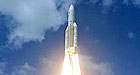
Two communications satellites destined to serve millions of Americans were delivered to space Friday evening to begin their television and Internet broadcasting missions. Liftoff of the Ariane 5 ECA rocket occurred on-time at 2208 GMT (5:08 p.m. EST) from French Guiana.

Read our full story.

2244 GMT (5:44 p.m. EST)

This marks the 27th successful launch of the Ariane 5 rocket and the 16th in a row.

2240 GMT (5:40 p.m. EST)

Plus+32 minutes, 5 seconds. SPACECRAFT SEPARATION! The AMERICOM 18 communications satellite has been released from the Ariane 5 rocket's upper stage, completing today's launch.

Built by Lockheed Martin, this A2100-model satellite carries C-band transponders for cable television transmissions, including high definition channels, across North America from geostationary orbit.

2238 GMT (5:38 p.m. EST)

Plus+30 minutes, 49 seconds. The the barrel-like "Sylda" payload adapter between WildBlue 1 and the AMERICOM 18 satellite has been jettisoned. This has exposed AMC for its upcoming release from the rocket.

2234 GMT (5:34 p.m. EST)

Plus+26 minutes, 55 seconds. SPACECRAFT SEPARATION! The WildBlue 1 broadband Internet spacecraft has been released from the Ariane 5 rocket's upper stage.

Built by Space Systems/Loral, this FS 1300-model craft is one of the world's first commercial all Ka-band satellites. It is designed for Internet access to rural parts of America where other broadband services are not readily available.

2232 GMT (5:32 p.m. EST)

Plus+24 minutes, 46 seconds. The new cryogenic upper stage for Ariane 5 has just shut down to complete its burn for today's launch. The stage will prepare for deployment of the two satellite payloads a few minutes from now.

2232 GMT (5:32 p.m. EST)

Plus+24 minutes. Altitude is 583 km, velocity is 9.2 km/sec.

2231 GMT (5:31 p.m. EST)

Plus+23 minutes. Less than two minutes of propulsion remains in the upper stage. Altitude is 478 km, velocity is 9.0 km/sec.

2228 GMT (5:28 p.m. EST)

Plus+20 minutes, 30 seconds. Altitude is 303 km, velocity is 8.6 km/sec.

2228 GMT (5:28 p.m. EST)

Plus+20 minutes. Just under five minutes remain in this firing of the upper stage.

2227 GMT (5:27 p.m. EST)

Plus+19 minutes. Altitude is 246 km, velocity is 8.4 km/sec.

2226 GMT (5:26 p.m. EST)

Plus+18 minutes, 30 seconds. Altitude is 234 km, velocity is 8.3 km/sec.

2225 GMT (5:25 p.m. EST)

Plus+17 minutes, 30 seconds. Altitude is 215 km, velocity is 8.1 km/sec.

2224 GMT (5:24 p.m. EST)

Plus+16 minutes, 30 seconds. The vehicle is beginning its upward climb again. Altitude is 206 km, velocity is 7.9 km/sec.

2223 GMT (5:23 p.m. EST)

Plus+15 minutes, 30 seconds. Altitude is 203 km, velocity is 7.8 km/sec.

2222 GMT (5:22 p.m. EST)

Plus+14 minutes. Altitude is 206 km, velocity is 7.5 km/sec.

2220 GMT (5:20 p.m. EST)

Plus+12 minutes. Altitude is 215 km, velocity is 7.2 km/sec.

2219 GMT (5:19 p.m. EST)

Plus+11 minutes. Arianespace says the trajectory remains normal. No problems have been reported in today's flight. Altitude is 221 km, velocity is 7.0 km/sec.

2218 GMT (5:18 p.m. EST)

Plus+10 minutes. The cryogenic upper stage motor continues to fire. Altitude is 226 km, velocity is 6.9 km/sec.

2217 GMT (5:17 p.m. EST)

Plus+9 minutes, 12 seconds. The upper stage of the Ariane 5 ECA rocket is up and burning to accelerate the payload into geosynchronous transfer orbit.

2217 GMT (5:17 p.m. EST)

Plus+9 minutes, 5 seconds. The main cryogenic stage's Vulcain engine has cut off and the spent stage has separated. It will fall back into the atmosphere prior to completing an orbit of Earth.

2216 GMT (5:16 p.m. EST)

Plus+8 minutes. Coming up on main stage shutdown in about a minute. Altitude is 233 km, velocity is 5.4 km/sec.

2215 GMT (5:15 p.m. EST)

Plus+7 minutes, 30 seconds. The rocket's climb has leveled out as designed. This temporary trajectory is needed in order to gain speed. Altitude is 232 km, velocity is 4.9 km/sec.

2214 GMT (5:14 p.m. EST)

Plus+6 minutes, 30 seconds. A late confirmation from Arianespace that the protective payload fairing enclosing the payload did separate from the Ariane 5 a few minutes ago.

2214 GMT (5:14 p.m. EST)

Plus+6 minutes. Altitude is 217 km, velocity is 3.5 km/sec.

2213 GMT (5:13 p.m. EST)

Plus+5 minutes. The main stage's Vulcain 2 engine continues to fire as it burns a mixture of liquid hydrogen and liquid oxygen rocket fuel. Altitude is now 194 km, with a speed of 2.9 km/sec.

2212 GMT (5:12 p.m. EST)

Plus+4 minutes. Ariane 5 is 160 km in altitude and traveling at 2.4 km/sec.

2211 GMT (5:11 p.m. EST)

Plus+3 minutes. The rocket is 113 km in altitude and traveling at 2.1 km/sec.

2210 GMT (5:10 p.m. EST)

Plus+2 minutes, 23 seconds. The solid rocket boosters have been jettisoned from the Ariane 5 rocket's core stage. The liquid-fueled Vulcain 2 main engine continues to fire to propel the vehicle and its satellite payload to space.

2209 GMT (5:09 p.m. EST)

Plus+1 minute, 30 seconds. About one minute left in the burn by the solid rocket boosters. The boosters are providing 90 percent of the liftoff thrust. The vehicle is 27 km in altitude already.

2209 GMT (5:09 p.m. EST)

Plus+60 seconds. The vehicle is on the proper trajectory as it rides the power of the twin solid rocket boosters and main stage liquid-fueled engine.

2208 GMT (5:08 p.m. EST)

Plus+35 seconds. Pitch and roll maneuvers has been performed by the Ariane 5 vehicle to position itself on the correct eastward heading bound for geosynchronous transfer orbit.

2208 GMT (5:08 p.m. EST)

LIFTOFF! Liftoff of the Arianespace Ariane 5 ECA rocket launching a pair of American communications satellites. And the vehicle has cleared the tower!

2207 GMT (5:07 p.m. EST)

Minus-50 seconds. The vehicle is switching to internal power.

2207 GMT (5:07 p.m. EST)

Minus-1 minute. Final events leading to launch will begin at Minus-37 seconds when the automated ignition sequence is started. The water suppression system at the launch pad will start at Minus-30 seconds. At Minus-22 seconds, overall control will be given to the onboard computer. The residual hydrogen burn flares will fire beneath the Vulcain engine at Minus-6 seconds to burn away any free hydrogen gas. At Minus-3 seconds, onboard systems take over and the two inertial guidance systems go to flight mode. Vulcain main engine ignition occurs at Minus-0 seconds with checkout between Plus+4 and 7 seconds. If there are no problems found, the solid rocket boosters are ignited at Plus+7.0 seconds for liftoff at Plus+7.3 seconds.

2206 GMT (5:06 p.m. EST)

Minus-2 minutes. The Vulcain 2 main engine supply valves are being opened. And the ground valves for engine chilldown are being closed.

2205 GMT (5:05 p.m. EST)

Minus-3 minutes. The scheduled launch time has been loaded into the rocket's main computer system. The main stage tank pressures should now be at flight level.

2204 GMT (5:04 p.m. EST)

Minus-4 minutes. Pressurization is now underway for the main cryogenic stage's liquid oxygen and hydrogen tanks. Also, final pyrotechnic arming is starting.

2202 GMT (5:02 p.m. EST)

Minus-6 minutes and counting. Liquid hydrogen and liquid oxygen supplies of the main and upper cryogenic stages are being verified at flight level. Also, the pyrotechnic line safety barriers are being armed.

2201 GMT (5:01 p.m. EST)

Minus-7 minutes and counting. The Synchronized Sequence is starting. Computers are now in control of this final segment of the launch countdown to prepare the rocket and ground systems for liftoff. There are two computers running the countdown -- one aboard the Ariane 5 and a redundant one at the ELA-3 launch complex.

2156 GMT (4:56 p.m. EST)

Minus-12 minutes and counting. The command center's status board is all green, indicating there are no constraints to launch.

2154 GMT (4:54 p.m. EST)

Minus-14 minutes and counting. The sun has set at the launch site as final preparations continue for today's launch of the Ariane 5 rocket at 2208 GMT. The countdown is headed to the Synchronized Sequence that assumes control of the clock in the final seven minutes to launch.

FRIDAY, DECEMBER 8, 2006

A pair of American communications satellites will ride an Ariane 5 rocket into orbit this evening. Blastoff is scheduled for 2208 GMT (5:08 p.m. EST) from Kourou, French Guiana.

The Arianespace booster will deploy the WildBlue 1 Internet connectivity spacecraft and the AMERICOM 18 cable TV broadcasting satellite into geosynchronous transfer orbit from the Guiana Space Center on the northeastern shore of South America.

Today's available launch window extends to 2251 GMT (5:51 p.m. EST).

This will be the fifth Ariane 5 of 2006, and the vehicle will fly in the more-powerful configuration of the heavy-lift rocket family with the Vulcain 2 upgraded first stage main engine and the ECA cryogenic upper stage.

The final countdown began this morning at the Launch-Minus 11 hour, 30 minute mark. That was followed by a check of electrical systems. Fueling of the first stage and new cryogenic upper stage with super-cold load of liquid hydrogen and liquid oxygen is set to commence in the final five hours before liftoff time.

The countdown will enter the synchronized launch sequence about seven minutes prior to launch. Next will be a fast-paced series of automated events transitioning the rocket and payload to internal power, pressurizing fuel tanks, and taking systems to flight mode. The Vulcain engine will come to life, followed by ignition of the solid rocket boosters and liftoff.

The twin boosters will separate at 2 minutes, 20 seconds, and the payload fairing will be released at Plus+3 minutes, 7 seconds. The cryogenic first stage will exhaust its propellant supply at Plus+8 minutes, 58 seconds, followed six seconds later by the jettisoning. After separation, the cryo upper stage will ignite to begin its 15.5-minute burn to complete the Ariane 5's ascent, shutting down at Plus+24 minutes, 46 seconds.

WildBlue 1 deployment is set for 26 minutes, 55 seconds into the mission. AMERICOM 18 will be released at Plus+32 minutes, 2 seconds.

Watch this page for live updates during the launch.

Copyright 2006 SpaceflightNow.com, all rights reserved.


Final Shuttle Mission Patch

Free shipping to U.S. addresses!

The crew emblem for the final space shuttle mission is now available in our store. Get this piece of history!
 U.S. STORE
 WORLDWIDE STORE

STS-134 Patch

Free shipping to U.S. addresses!

The final planned flight of space shuttle Endeavour is symbolized in the official embroidered crew patch for STS-134. Available in our store!
 U.S. STORE
 WORLDWIDE STORE

Ares 1-X Patch
The official embroidered patch for the Ares 1-X rocket test flight, is available for purchase.
 U.S. STORE
 WORLDWIDE STORE

Apollo Collage
This beautiful one piece set features the Apollo program emblem surrounded by the individual mission logos.
 U.S. STORE
 WORLDWIDE STORE

Project Orion
The Orion crew exploration vehicle is NASA's first new human spacecraft developed since the space shuttle a quarter-century earlier. The capsule is one of the key elements of returning astronauts to the Moon.
 U.S. STORE


Fallen Heroes Patch Collection
The official patches from Apollo 1, the shuttle Challenger and Columbia crews are available in the store.
 U.S. STORE
 WORLDWIDE STORE

INDEX | PLUS | NEWS ARCHIVE | LAUNCH SCHEDULE
ASTRONOMY NOW | STORE

ADVERTISE

© 2012 Spaceflight Now Inc.